Efrata Denny

Personal Blog contains Wines, Foods, Traveling, and Photography

  • Home
  • All About Me
    • Yes This is Me
    • Private Message
    • Guest Book
    • Collection
      • Cigars
      • IntermezZo
      • Liquors
      • Sketch
      • Zombie Story
    • Friends
    • Portfolio
      • Kraft Foods
      • Arnott’s
      • Glaxo Smith Kline
      • Online Store
    • Press
  • Wines
    • Argentina
    • Australia
    • Austria
    • Chile
    • France
    • Indonesia
    • Israel
    • Italia
    • Portugal
    • South Africa
    • Spain
    • USA
    • Vietnam
  • Food
  • Traveling
    • Australia
    • China
    • Hong Kong
    • Indonesia
    • Macau
    • Malaysia
    • Philippines
    • Singapore
    • Thailand
    • Vietnam
  • Photography
    • Model
    • Still Life
    • Liquidart
    • Underwater
  • Awards
  • Supply Chain
    • Sustainability
    • Workshop

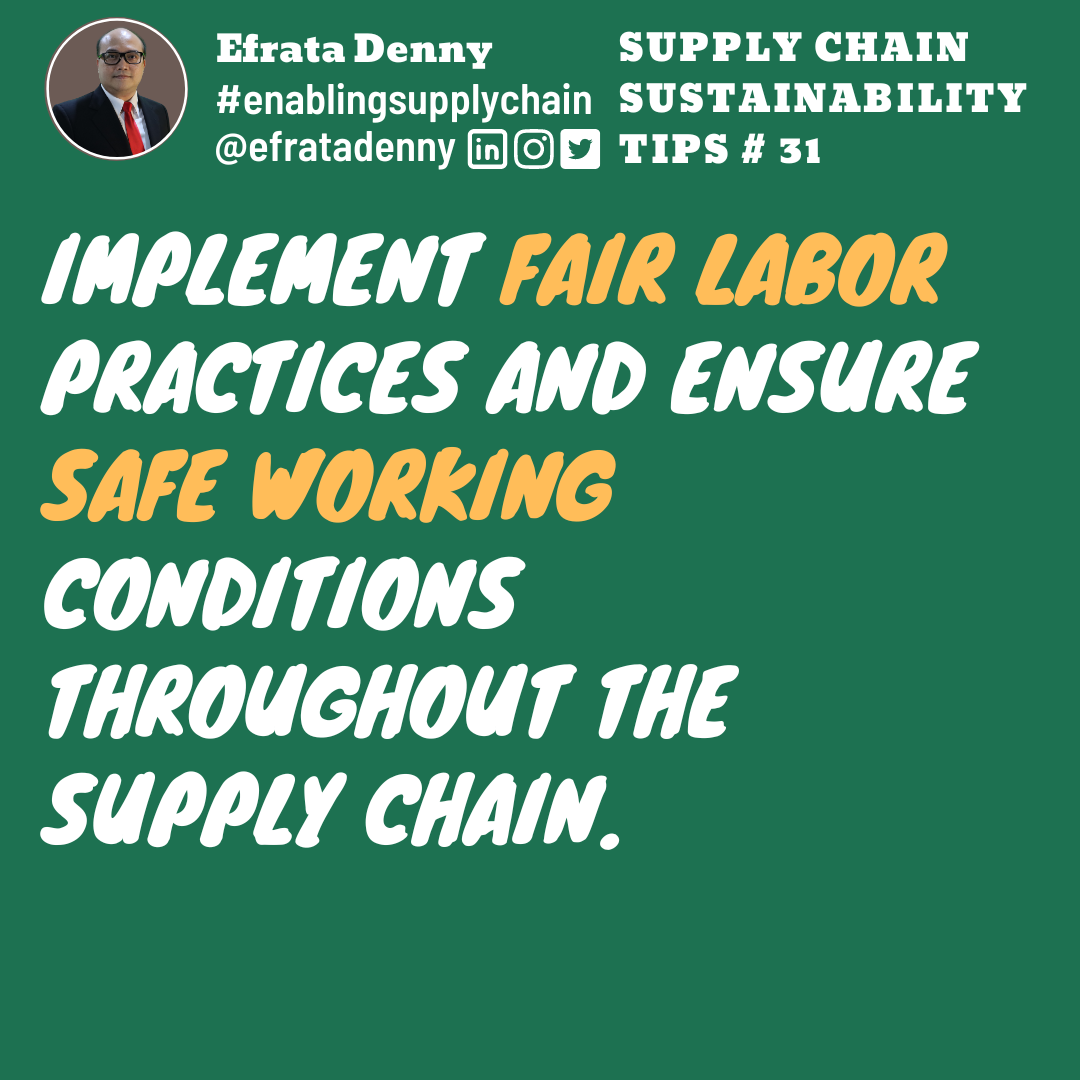
Building a Responsible Supply Chain: Fair Labor and Safe Working Conditions

Posted by efratadenny on 28 June 2023
Posted in: Supply Chain, Sustainability. Tagged: enablingsupplychain, Supply Chain, Supply Chain Management, Sustainability, Sustainable. Leave a comment

Creating a responsible and ethical supply chain goes beyond environmental sustainability. It also entails implementing fair labor practices and ensuring safe working conditions for all workers involved. By prioritizing the empowerment and well-being of workers, businesses can contribute to a more equitable and sustainable world. In this article, we will explore essential tips for building a responsible supply chain that respects labor rights and ensures safe working conditions.

  1. Respect workers’ rights: Upholding internationally recognized labor rights is fundamental to a responsible supply chain. This includes providing fair wages, reasonable working hours, and freedom of association as outlined by organizations such as the International Labour Organization (ILO). Treat workers as valuable partners in your supply chain and ensure their dignity and rights are respected.
  2. Collaborate with suppliers: Engage with your suppliers to ensure they adhere to ethical labor practices. Foster transparency and establish regular dialogue to address any concerns or violations promptly. By developing strong relationships with suppliers, you can work together to improve labor conditions and create positive change throughout the supply chain.
  3. Conduct regular audits: Regularly audit supplier facilities to assess compliance with labor standards. These audits should focus on fair treatment, safe working conditions, and proper worker protections. By conducting thorough assessments, you can identify areas that require improvement and work collaboratively with suppliers to implement necessary changes.
  4. Provide training and education: Invest in training programs that enhance worker skills and empower them with knowledge. By offering opportunities for professional development, you can support workers in advancing their careers. Training initiatives should also include educating workers about their rights, workplace safety practices, and channels for reporting grievances.
  5. Encourage worker well-being: Create a supportive work environment that promotes the physical and mental well-being of workers. Provide access to healthcare facilities, counseling services, and resources for maintaining a healthy work-life balance. Prioritizing worker well-being fosters loyalty, productivity, and long-term success.
  6. Support worker representation: Encourage the formation of worker committees or unions to allow for collective bargaining and empower employees to have a voice in decision-making processes. Supporting worker representation ensures that their perspectives are taken into account and helps create a more inclusive and equitable workplace.
  7. Continuous improvement: Regularly evaluate and improve labor practices by seeking feedback from workers. Conduct satisfaction surveys, implement suggestions for positive change, and address any concerns promptly. Engage workers in the process of continuous improvement to create a culture of collaboration and shared responsibility.

Building a responsible supply chain requires a commitment to fair labor practices and safe working conditions. By respecting workers’ rights, collaborating with suppliers, conducting regular audits, providing training, supporting well-being, and encouraging worker representation, businesses can empower workers and contribute to a more equitable and sustainable world. Let us stand together in creating responsible supply chains that prioritize the well-being and rights of workers. Together, we can build a brighter future for all.
Share this:

  • Share on Facebook (Opens in new window) Facebook
  • Share on X (Opens in new window) X
  • Share on LinkedIn (Opens in new window) LinkedIn
  • Email a link to a friend (Opens in new window) Email
  • Share on Tumblr (Opens in new window) Tumblr
  • Share on Pinterest (Opens in new window) Pinterest
Like Loading...

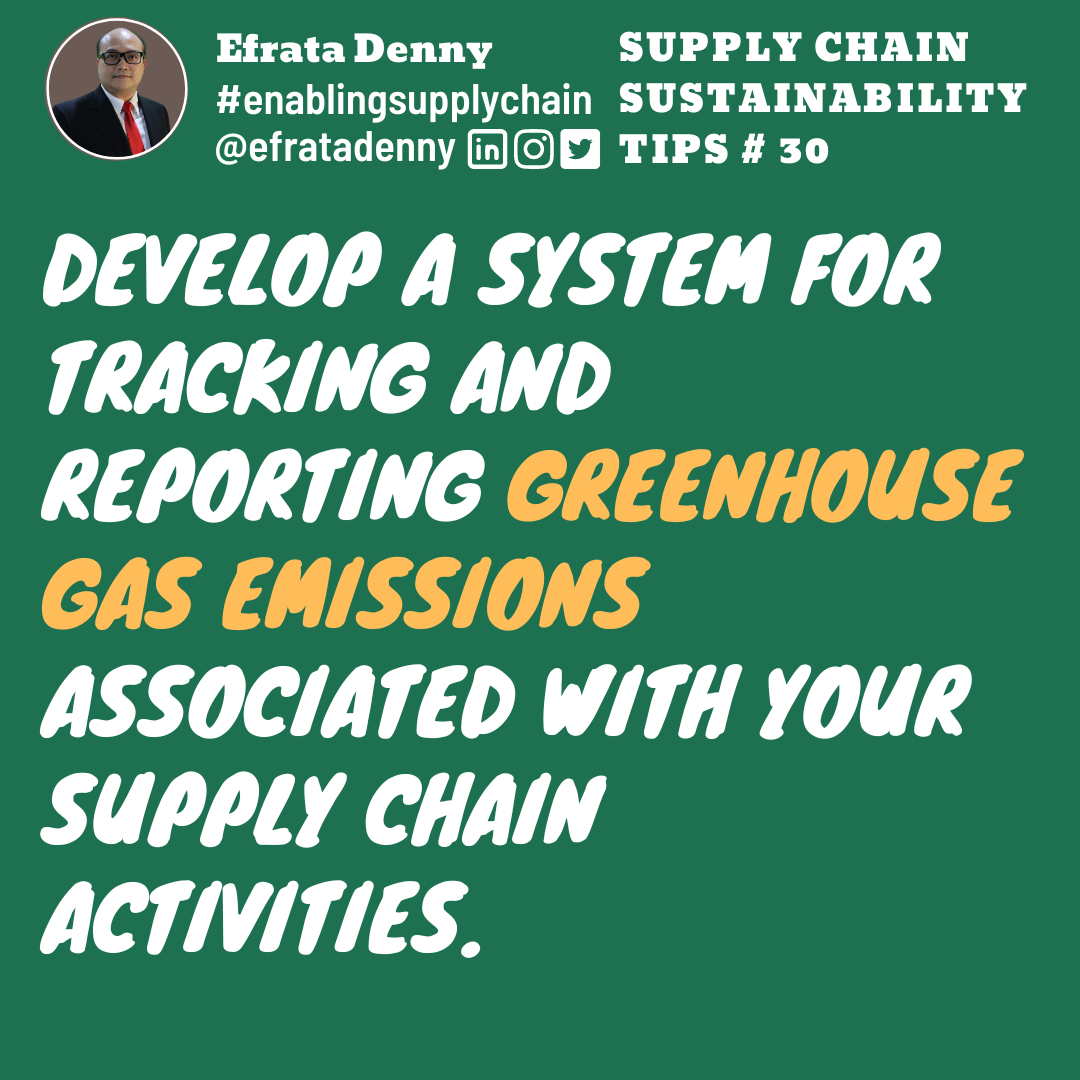
Tracking and Reducing Greenhouse Gas Emissions in Your Supply Chain

Posted by efratadenny on 27 June 2023
Posted in: Supply Chain, Sustainability. Tagged: enablingsupplychain, Supply Chain, Supply Chain Management, Sustainability, Sustainable. Leave a comment

Measuring and reducing greenhouse gas (GHG) emissions is a critical step towards creating a sustainable future. By tracking emissions associated with your supply chain activities, you gain valuable insights into your carbon footprint and can implement targeted strategies for emission reduction. In this article, we will explore practical tips to develop a robust system for tracking GHG emissions in your supply chain.

  1. Define emission scope: Start by defining the scope of emissions you want to track. This includes direct emissions from your operations (Scope 1), indirect emissions from purchased energy (Scope 2), and supply chain emissions (Scope 3). By considering all emission sources, you gain a comprehensive understanding of your carbon footprint.
  2. Gather data: Collect data on energy consumption, fuel usage, transportation, and other relevant activities throughout your supply chain. Engage suppliers to obtain comprehensive emissions data from their operations. The more accurate and comprehensive the data, the better you can identify emission hotspots and develop targeted reduction strategies.
  3. Use emission factors: Utilize industry-standard emission factors or conduct your own research to calculate emissions associated with each activity. Consider factors such as energy sources, transportation modes, and fuel types. This ensures that your calculations accurately reflect the environmental impact of your supply chain activities.
  4. Choose a tracking system: Implement a software solution or develop a customized tracking system to collect, organize, and analyze emissions data. A tracking system streamlines the process, allowing for efficient data management and accurate reporting. Choose a system that aligns with your specific needs and facilitates easy monitoring of emissions over time.
  5. Set reduction targets: Set ambitious GHG reduction targets based on your emissions data. Consider aligning your targets with science-based goals or international sustainability frameworks. Clear and measurable targets provide a roadmap for action and ensure your efforts are focused on meaningful emission reduction.
  6. Implement emission reduction strategies: Develop and implement initiatives to reduce emissions across your supply chain. Optimize transportation routes to minimize fuel consumption and emissions, adopt energy-efficient technologies in your operations, and promote the use of renewable energy sources. Collaborate with suppliers to encourage sustainable practices and explore joint emission reduction projects.
  7. Regular reporting: Generate periodic sustainability reports that detail your GHG emissions, progress toward reduction targets, and initiatives undertaken to address emission hotspots. Regular reporting demonstrates transparency and accountability, and it allows you to track the effectiveness of your emission reduction efforts. Use these reports to communicate your commitment to sustainability with stakeholders.

Tracking and reducing GHG emissions in your supply chain is a crucial step towards building a low-carbon and sustainable future. By developing a robust system for emissions tracking, setting reduction targets, and implementing targeted strategies, you can make a significant impact in mitigating climate change. Let’s measure our emissions, reduce our carbon footprints, and lead the way toward a more sustainable planet. Together, we can create a greener future!

Share this:

  • Share on Facebook (Opens in new window) Facebook
  • Share on X (Opens in new window) X
  • Share on LinkedIn (Opens in new window) LinkedIn
  • Email a link to a friend (Opens in new window) Email
  • Share on Tumblr (Opens in new window) Tumblr
  • Share on Pinterest (Opens in new window) Pinterest
Like Loading...

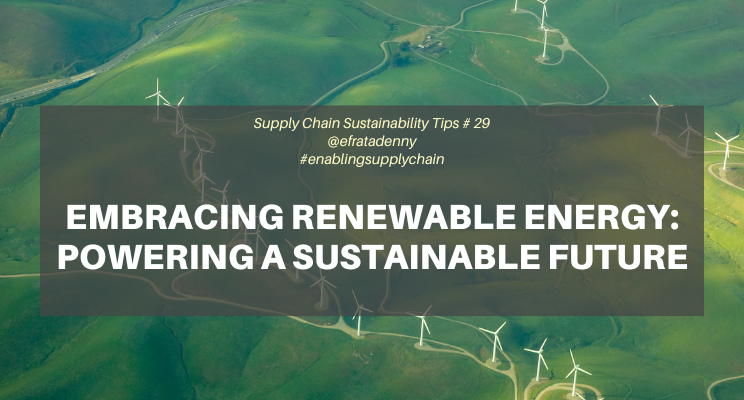
Embracing Renewable Energy: Powering a Sustainable Future

Posted by efratadenny on 26 June 2023
Posted in: Supply Chain, Sustainability. Tagged: enablingsupplychain, Supply Chain, Supply Chain Management, Sustainability, Sustainable. Leave a comment

Transitioning to renewable energy is a crucial step in mitigating climate change and building a sustainable future. By investing in renewable energy infrastructure, businesses can reduce their carbon footprint and contribute to a cleaner, greener planet. In this article, we will explore practical tips to embrace renewable energy and power your operations sustainably.

  1. Install solar panels: Harness the abundant power of the sun by installing solar panels on rooftops or open spaces. Solar panels generate clean and renewable energy, offsetting your electricity consumption and reducing reliance on fossil fuels. By utilizing solar energy, you can significantly reduce carbon emissions and lower your environmental impact.
  2. Embrace wind turbines: If you operate in areas with favorable wind conditions, consider utilizing wind turbines to harness the power of the wind. Wind turbines convert wind energy into electricity, providing a sustainable and renewable power source. By embracing wind energy, you can diversify your renewable energy portfolio and contribute to a greener grid.
  3. Conduct feasibility studies: Before investing in renewable energy infrastructure, conduct feasibility studies to assess the suitability and potential benefits based on your location, energy requirements, and available resources. These studies will help you make informed decisions about the most viable and cost-effective renewable energy options for your business.
  4. Explore green energy suppliers: Collaborate with energy suppliers who offer renewable energy options. By sourcing your electricity from clean and sustainable sources, you support the growth of renewable energy generation and reduce the demand for fossil fuel-based power. This collaboration aligns your energy consumption with your sustainability goals.
  5. Energy storage solutions: Invest in energy storage technologies such as batteries to store excess renewable energy. Energy storage systems allow you to capture and store renewable energy during times of high generation and utilize it during periods of high demand or low generation. This helps optimize your renewable energy utilization and ensures a reliable power supply.
  6. Monitor energy consumption: Implement energy monitoring systems to track your energy consumption patterns. By understanding your energy usage, you can identify areas for improvement, optimize energy efficiency, and reduce overall energy consumption. Energy monitoring empowers you to make data-driven decisions and further enhance your sustainability efforts.
  7. Communicate your commitment: Share your renewable energy initiatives with customers and stakeholders. Highlight your dedication to sustainable practices and inspire others to follow suit. By communicating your commitment to renewable energy, you not only raise awareness but also contribute to the broader adoption of clean energy solutions.

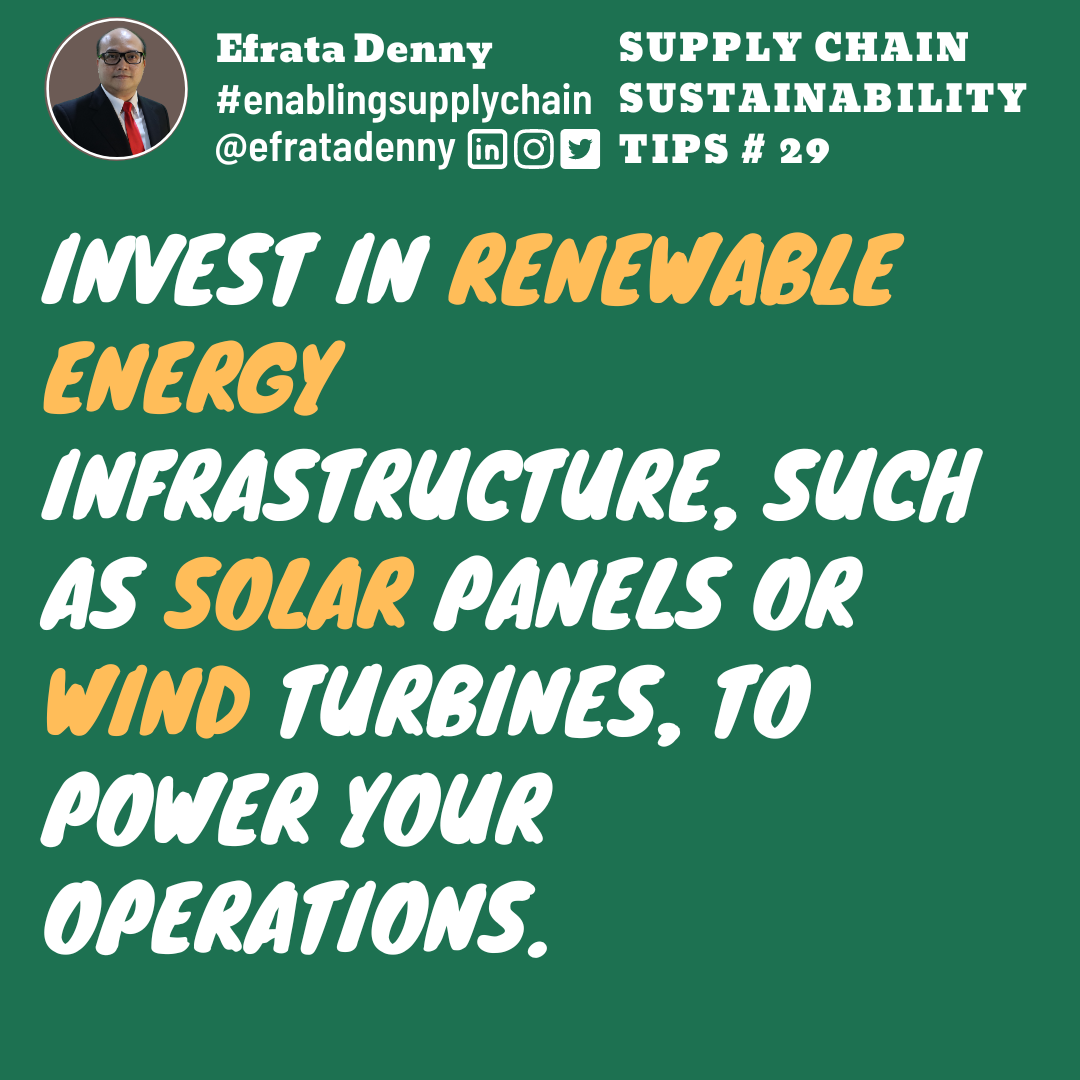
Investing in renewable energy infrastructure, such as solar panels and wind turbines, empowers businesses to reduce their carbon footprint and embrace a sustainable energy future. By adopting renewable energy sources, businesses can contribute to a cleaner and greener planet while setting an example for others to follow. Let’s harness the power of the sun and wind to create a brighter and more sustainable future for all.

Share this:

  • Share on Facebook (Opens in new window) Facebook
  • Share on X (Opens in new window) X
  • Share on LinkedIn (Opens in new window) LinkedIn
  • Email a link to a friend (Opens in new window) Email
  • Share on Tumblr (Opens in new window) Tumblr
  • Share on Pinterest (Opens in new window) Pinterest
Like Loading...

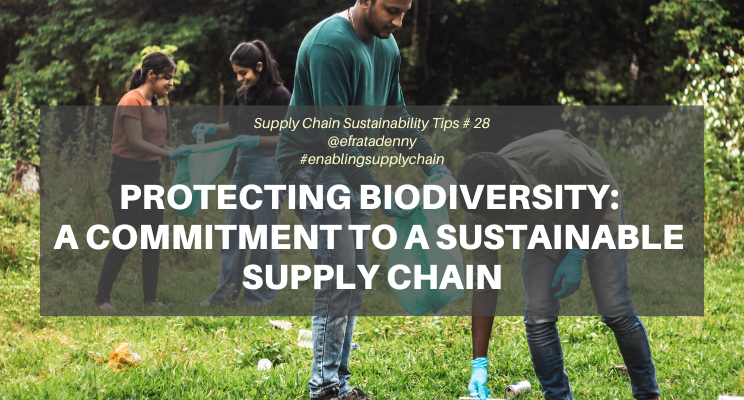
Protecting Biodiversity: A Commitment to a Sustainable Supply Chain

Posted by efratadenny on 25 June 2023
Posted in: Supply Chain, Sustainability. Tagged: enablingsupplychain, Supply Chain, Supply Chain Management, Sustainability, Sustainable. Leave a comment

Biodiversity conservation is crucial for maintaining the balance of ecosystems and ensuring a sustainable future for our planet. As businesses, we have a responsibility to consider the impact of our supply chain activities on local ecosystems. In this article, we will explore practical tips to promote biodiversity conservation and create a more sustainable supply chain.

  1. Conduct biodiversity assessments: Start by evaluating the potential impact of your supply chain activities on local ecosystems. Consider factors such as habitat destruction, species displacement, or pollution. By understanding the potential risks, you can develop strategies to minimize negative impacts and protect biodiversity.
  2. Preserve natural habitats: Identify ways to minimize disruption to natural habitats during sourcing, production, and transportation processes. This may involve working closely with suppliers to ensure responsible practices that avoid encroaching upon biodiversity hotspots. By preserving natural habitats, we protect the delicate balance of ecosystems.
  3. Support sustainable agriculture: Prioritize suppliers who practice sustainable agricultural methods. Encourage biodiversity-friendly farming techniques that avoid the use of harmful pesticides and promote soil health. Sustainable agriculture not only protects biodiversity but also ensures long-term food security and the well-being of local communities.
  4. Responsible land use: Promote responsible land use practices throughout your supply chain. Avoid deforestation by sourcing from suppliers who demonstrate a commitment to protecting natural areas. Consider supporting regenerative agriculture methods that restore soil health and promote biodiversity.
  5. Reduce pollution and waste: Implement measures to minimize pollution and waste generation across the supply chain. Evaluate processes to prevent harmful substances from reaching ecosystems. By reducing pollution and waste, we safeguard the health of ecosystems and prevent the degradation of natural habitats.
  6. Engage local communities: Collaborate with local communities, indigenous groups, and conservation organizations. Seek their insights and involve them in decision-making processes. By understanding their concerns and working together, you can develop solutions that prioritize biodiversity conservation while respecting the needs of local communities.
  7. Support restoration initiatives: Contribute to ecosystem restoration projects as part of your commitment to biodiversity conservation. Support initiatives such as reforestation or wetland rehabilitation to revitalize impacted areas and restore critical habitats. By actively participating in restoration efforts, you can help conserve biodiversity and create positive change.

Protecting biodiversity is essential for the long-term sustainability of our planet. By considering the impact of supply chain activities on local ecosystems and implementing strategies to promote biodiversity conservation, we can be stewards of the environment. Let’s commit to preserving natural habitats, supporting sustainable agriculture, reducing pollution, engaging with local communities, and actively participating in restoration initiatives. Together, we can build a more sustainable supply chain and contribute to the protection of our planet’s rich biodiversity.

Share this:

  • Share on Facebook (Opens in new window) Facebook
  • Share on X (Opens in new window) X
  • Share on LinkedIn (Opens in new window) LinkedIn
  • Email a link to a friend (Opens in new window) Email
  • Share on Tumblr (Opens in new window) Tumblr
  • Share on Pinterest (Opens in new window) Pinterest
Like Loading...

Water Conservation: Building a Sustainable Supply Chain

Posted by efratadenny on 24 June 2023
Posted in: Supply Chain, Sustainability. Tagged: enablingsupplychain, Supply Chain, Supply Chain Management, Sustainability, Sustainable. Leave a comment

Water is a precious resource that plays a vital role in our ecosystem and sustains life. As businesses, it is our responsibility to implement water-saving practices and conserve this valuable resource throughout the supply chain. In this article, we will explore practical tips to promote water conservation and create a more sustainable future.

  1. Water recycling systems: Install water recycling systems to treat and reuse water in various processes. By recycling water, you can reduce the need for freshwater intake and minimize wastewater generation. This approach helps conserve water resources and promotes responsible water management.
  2. Rainwater harvesting: Collecting rainwater is an effective way to reduce reliance on freshwater sources. Implement rainwater harvesting systems to capture rainwater from rooftops, parking lots, or other surfaces. This collected water can be used for non-potable purposes such as irrigation or cleaning, minimizing the use of treated water.
  3. Efficient equipment and fixtures: Opt for water-efficient equipment, machinery, and fixtures throughout your supply chain. Choose products that are designed to minimize water consumption while maintaining optimal performance. Upgrading to water-saving technologies can significantly reduce water usage without compromising productivity.
  4. Leak detection and repair: Regularly inspect pipelines, equipment, and infrastructure for leaks. Even small leaks can lead to significant water loss over time. By promptly detecting and repairing leaks, you can prevent unnecessary water waste and conserve this precious resource.
  5. Optimize irrigation practices: Implement smart irrigation systems and techniques to deliver water efficiently to plants. Consider methods such as drip irrigation or soil moisture sensors to ensure that water is used precisely where and when it is needed. By optimizing irrigation practices, you can minimize water wastage and support healthy plant growth.
  6. Educate and engage employees: Raise awareness among your employees about the importance of water conservation. Provide training on water-saving practices and encourage their active participation in conservation efforts. When employees understand the impact of their actions and adopt water-saving habits, it creates a culture of responsibility throughout the organization.
  7. Collaborate with suppliers: Engage your suppliers in water conservation efforts. Share best practices, encourage their commitment to sustainable water management, and explore joint initiatives. By collaborating with suppliers, you can work together to optimize water usage, promote responsible practices, and create a collective impact.

Water conservation is essential for building a sustainable supply chain and ensuring the availability of this vital resource for future generations. By implementing water-saving practices such as water recycling systems, rainwater harvesting, efficient equipment, leak detection, optimized irrigation, employee engagement, and supplier collaboration, we can significantly reduce our water footprint. Let’s join forces to conserve water, protect ecosystems, and create a sustainable water future for all. Together, we can make a difference!

Share this:

  • Share on Facebook (Opens in new window) Facebook
  • Share on X (Opens in new window) X
  • Share on LinkedIn (Opens in new window) LinkedIn
  • Email a link to a friend (Opens in new window) Email
  • Share on Tumblr (Opens in new window) Tumblr
  • Share on Pinterest (Opens in new window) Pinterest
Like Loading...

Posts navigation

← Older Entries
Newer Entries →
  • Yes You Can Search

  • Yes This is Calendar

    February 2026
    M T W T F S S
     1
    2345678
    9101112131415
    16171819202122
    232425262728  
    « Sep    
  • Yes These are Archives

  • Yes Recent Posts

    • The Future of Supply Chain: How AI and Automation Are Revolutionizing the Industry
    • Top 10 Supply Chain Innovations to Watch in 2024
    • The Rise of Sustainable Supply Chains: Why Going Green is Now a Business Imperative
    • The Great Debate: Centralized vs. Decentralized Supply Chains—Which is Better for 2024?
    • The Paradox of Supply Chain and Logistics
    • Agility Unleashed: The Power of Continuous Evaluation in Procurement Strategy
    • Cost Clarity: Mastering Total Cost of Acquisition for Procurement Excellence
    • Strategic Sourcing Mastery: Unleashing Procurement Excellence through Consolidated Purchasing
    • Unleashing Operational Excellence Through Just-in-Time (JIT) Inventory Management
    • Revolutionizing Procurement: The Strategic Impact of Harnessing Reverse Auctions for Maximum Cost Savings
  • Yes Follow Me

    Post a Day 2012 Twitter EfrataDenny
  • Yes This is My Twitter

    Tweets by efratadenny
  • Yes Advertising

    Roppopo.com
  • Yes This is Category

    Australia Bali Bandung China Collection Food France Indonesia Intermezzo Jakarta Kraft Foods Leadership Lighting Experiences Liquidart Manado Management Model Online Store Photography Portfolio Press Procurement Still Life Supply Chain Sustainability Traveling Underwater Wines Yes This is Me
  • Enter your email address to follow this blog and receive notifications of new posts by email.

    Join 986 other subscribers
  • Flickr Photos

    Last Supper Wood EngravingChristmas SockChristmas Bell
    More Photos
  • Recent Comments

    Bogdan Kolos's avatarBogdan Kolos on The Power of Strong Supplier R…
    Reighne Sq's avatarReighne Sq on Weekly Photo Challenge: One Sh…
    Shubham's avatarShubham on Long Tail and Short Tail Red…
    Terrence M's avatarTerrence M on Fettuccine Carbonara
    Ivan's avatarIvan on Maria Clara Sangria Red W…
    wahyu jatmiko krisdiyanto's avatarwahyu jatmiko krisdi… on Mie Bakso
    Weekly Photo Challen… on Weekly Photo Challenge: F…
    bali ratih's avatarbali ratih on Diving at Benoa
    Berita Hari Ini's avatarBerita Hari Ini on Miss Indonesia will increase W…
    geraldine's avatargeraldine on Maria Clara Sangria Red W…
    Chika Lesmana's avatarChika Lesmana on Shanghai Ice
    Chika Lesmana's avatarChika Lesmana on Shanghai Ice
    ipah kholipah's avataripah kholipah on Shanghai Ice
    Evi's avatarEvi on Platinum Hill Limited Edition…
    renxkyoko's avatarrenxkyoko on Sirloin Steak
  • Yes Page Info

    Yahoo bot last visit Msn bot last visit Google PageRank Checker

    The best of travel stories in and around Singapore TravelerVoice Bloggers - Meet Millions of Bloggers Personal Blogs visitor counters
  • Yes Facebook

    Yes Facebook
Create a free website or blog at WordPress.com.
Efrata Denny
Create a free website or blog at WordPress.com.
Privacy & Cookies: This site uses cookies. By continuing to use this website, you agree to their use.
To find out more, including how to control cookies, see here: Cookie Policy
  • Subscribe Subscribed
    • Efrata Denny
    • Join 966 other subscribers
    • Already have a WordPress.com account? Log in now.
    • Efrata Denny
    • Subscribe Subscribed
    • Sign up
    • Log in
    • Report this content
    • View site in Reader
    • Manage subscriptions
    • Collapse this bar
 

Loading Comments...
 

    %d