Efrata Denny

Personal Blog contains Wines, Foods, Traveling, and Photography

  • Home
  • All About Me
    • Yes This is Me
    • Private Message
    • Guest Book
    • Collection
      • Cigars
      • IntermezZo
      • Liquors
      • Sketch
      • Zombie Story
    • Friends
    • Portfolio
      • Kraft Foods
      • Arnott’s
      • Glaxo Smith Kline
      • Online Store
    • Press
  • Wines
    • Argentina
    • Australia
    • Austria
    • Chile
    • France
    • Indonesia
    • Israel
    • Italia
    • Portugal
    • South Africa
    • Spain
    • USA
    • Vietnam
  • Food
  • Traveling
    • Australia
    • China
    • Hong Kong
    • Indonesia
    • Macau
    • Malaysia
    • Philippines
    • Singapore
    • Thailand
    • Vietnam
  • Photography
    • Model
    • Still Life
    • Liquidart
    • Underwater
  • Awards
  • Supply Chain
    • Sustainability
    • Workshop

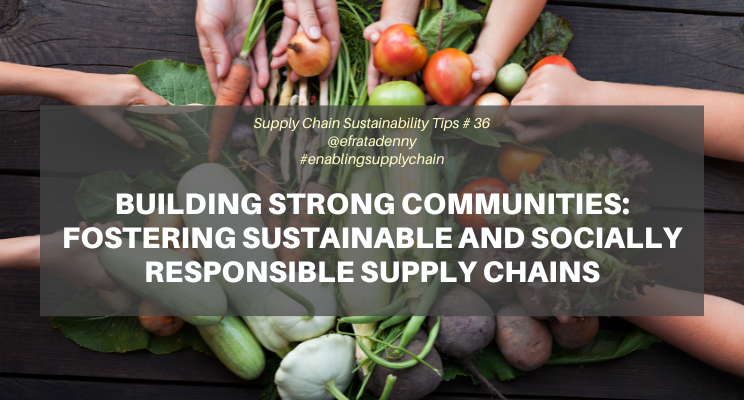
Building Strong Communities: Fostering Sustainable and Socially Responsible Supply Chains

Posted by efratadenny on 3 July 2023
Posted in: Supply Chain, Sustainability. Tagged: enablingsupplychain, Supply Chain, Supply Chain Management, Sustainability, Sustainable. Leave a comment

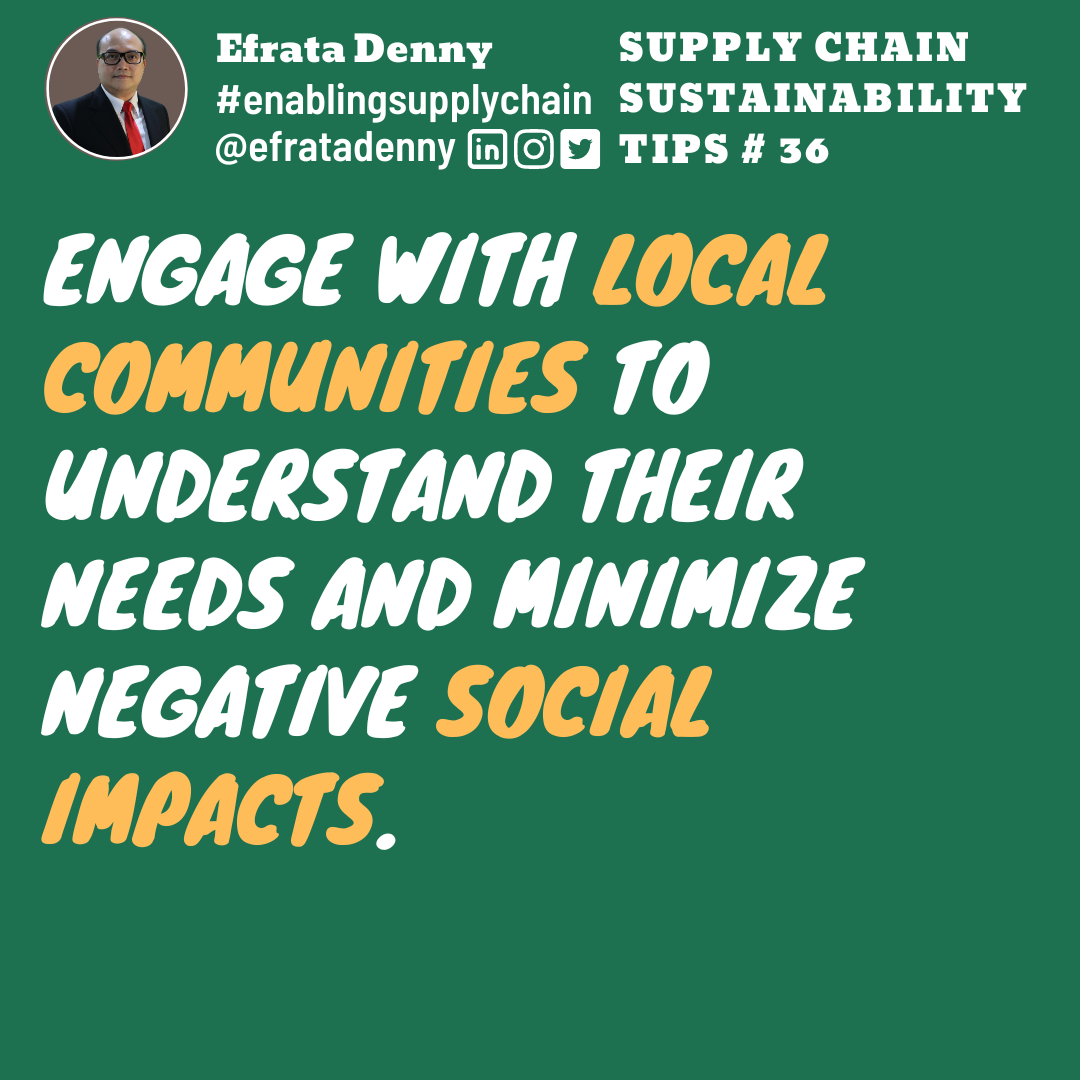
Engaging with local communities is a crucial aspect of building sustainable and socially responsible supply chains. By actively involving community members, understanding their needs, and minimizing negative social impacts, businesses can foster positive relationships and contribute to the well-being of communities. In this article, we will explore practical tips for community engagement and minimizing negative social impacts to build stronger, more sustainable supply chains.

  1. Community dialogue: Initiate open and transparent communication channels with local communities to establish a meaningful dialogue. By actively listening to their needs, concerns, and aspirations, businesses can gain valuable insights and build trust.
  2. Stakeholder engagement: Involve local community members, non-governmental organizations (NGOs), and relevant stakeholders in decision-making processes. By including their perspectives, businesses can ensure that their actions align with the community’s interests and create shared value.
  3. Social impact assessments: Conduct thorough assessments to understand the potential social impacts of your operations. Identify any potential negative effects and develop strategies to mitigate them, ensuring that your activities contribute positively to the community.
  4. Local employment and empowerment: Promote local employment opportunities and invest in skills development and capacity-building initiatives. By empowering community members through job creation and training, businesses can contribute to local economic growth and foster self-sufficiency.
  5. Respect cultural heritage: Respect and preserve the cultural heritage, traditions, and sacred sites of the local community. Ensure that your operations do not adversely impact cultural assets, and actively seek ways to support and celebrate local customs.
  6. Support local initiatives: Collaborate with community-based organizations and support local projects that address social needs. By investing in education, healthcare, environmental conservation, and other initiatives, businesses can make a meaningful and positive impact on the community’s well-being.
  7. Responsible sourcing: Align your sourcing practices with ethical standards. Support fair trade, respect indigenous rights, and promote social justice within your supply chain. By prioritizing responsible sourcing, you can contribute to the social and economic development of communities at the source of your materials.

Engaging with local communities and minimizing negative social impacts is essential for building sustainable and socially responsible supply chains. By establishing open communication channels, involving stakeholders, conducting social impact assessments, promoting local employment and empowerment, respecting cultural heritage, supporting local initiatives, and practicing responsible sourcing, businesses can foster positive relationships and contribute to community well-being. Let’s work together to build stronger communities, create shared value, and shape a brighter future for all. Embrace community engagement and make a difference!
Share this:

  • Share on Facebook (Opens in new window) Facebook
  • Share on X (Opens in new window) X
  • Share on LinkedIn (Opens in new window) LinkedIn
  • Email a link to a friend (Opens in new window) Email
  • Share on Tumblr (Opens in new window) Tumblr
  • Share on Pinterest (Opens in new window) Pinterest
Like Loading...

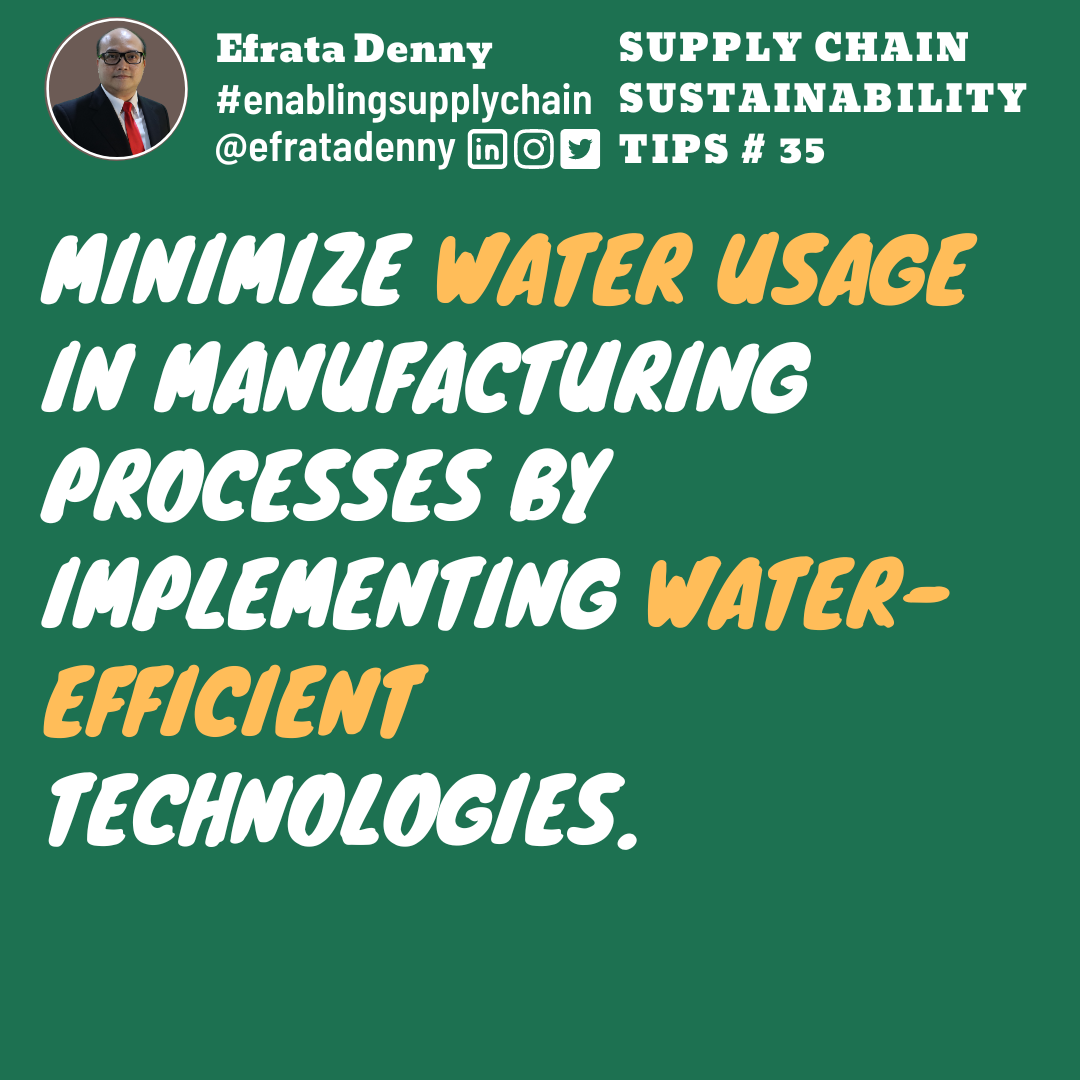
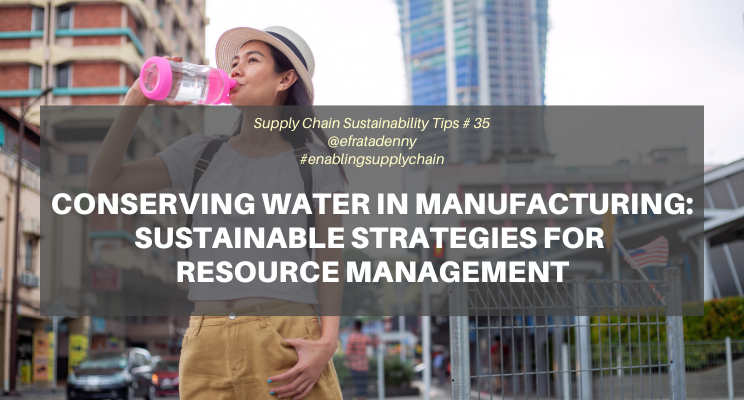
Conserving Water in Manufacturing: Sustainable Strategies for Resource Management

Posted by efratadenny on 2 July 2023
Posted in: Supply Chain, Sustainability. Tagged: enablingsupplychain, Supply Chain, Supply Chain Management, Sustainability, Sustainable. Leave a comment

Water is a valuable resource, and minimizing its usage in manufacturing processes is essential for sustainable resource management. By implementing water-efficient technologies and adopting responsible water management practices, manufacturers can make a significant impact on water conservation. In this article, we will explore practical tips to reduce water consumption in manufacturing and contribute to a more sustainable future.

  1. Assessing water footprint: Analyze your manufacturing processes to identify water-intensive areas. By understanding your water footprint, you can prioritize efforts for improvement and focus on areas that have the most significant potential for water conservation.
  2. Water-efficient technologies: Invest in water-efficient equipment and technologies that reduce water consumption. Consider installing low-flow fixtures, water-recycling systems, and closed-loop cooling systems. These innovations can significantly minimize water usage while maintaining operational efficiency.
  3. Process optimization: Optimize manufacturing processes to minimize water waste. Identify opportunities to improve cleaning procedures, reduce leakages, and implement smart water management systems. By continuously assessing and refining your processes, you can significantly reduce water consumption without compromising product quality.
  4. Employee awareness: Educate and engage employees about the importance of water conservation. Provide training on water-efficient practices and encourage their active participation. Empowering employees to adopt water-saving behaviors can create a culture of sustainability within the manufacturing facility.
  5. Regular maintenance: Ensure regular maintenance of equipment and machinery to prevent water leaks. Leaks not only waste water but also impact overall efficiency. By conducting routine inspections and addressing leaks promptly, you can conserve water and identify opportunities for further improvement.
  6. Rainwater harvesting: Implement rainwater harvesting systems to capture and utilize rainwater for non-potable purposes such as irrigation or cleaning. Harvesting rainwater reduces the strain on freshwater resources and provides a sustainable alternative for certain manufacturing processes.
  7. Collaboration and innovation: Collaborate with industry partners, research institutions, and water conservation organizations to explore innovative solutions for water conservation in manufacturing processes. By sharing knowledge, leveraging collective expertise, and fostering innovation, manufacturers can drive meaningful change in water management practices.

Conserving water in manufacturing is a crucial step towards sustainable resource management. By implementing water-efficient technologies, optimizing processes, raising employee awareness, conducting regular maintenance, exploring rainwater harvesting, and collaborating on innovative solutions, manufacturers can significantly reduce water consumption and contribute to a more sustainable future. Let’s prioritize responsible water management and work together to conserve this precious resource. By taking action today, we can create a more sustainable manufacturing industry and a better world for future generations. Conserve water and make a difference!

Share this:

  • Share on Facebook (Opens in new window) Facebook
  • Share on X (Opens in new window) X
  • Share on LinkedIn (Opens in new window) LinkedIn
  • Email a link to a friend (Opens in new window) Email
  • Share on Tumblr (Opens in new window) Tumblr
  • Share on Pinterest (Opens in new window) Pinterest
Like Loading...

Green Transportation Strategies for a Sustainable Supply Chain

Posted by efratadenny on 1 July 2023
Posted in: Supply Chain, Sustainability. Tagged: enablingsupplychain, Supply Chain, Supply Chain Management, Sustainability, Sustainable. Leave a comment

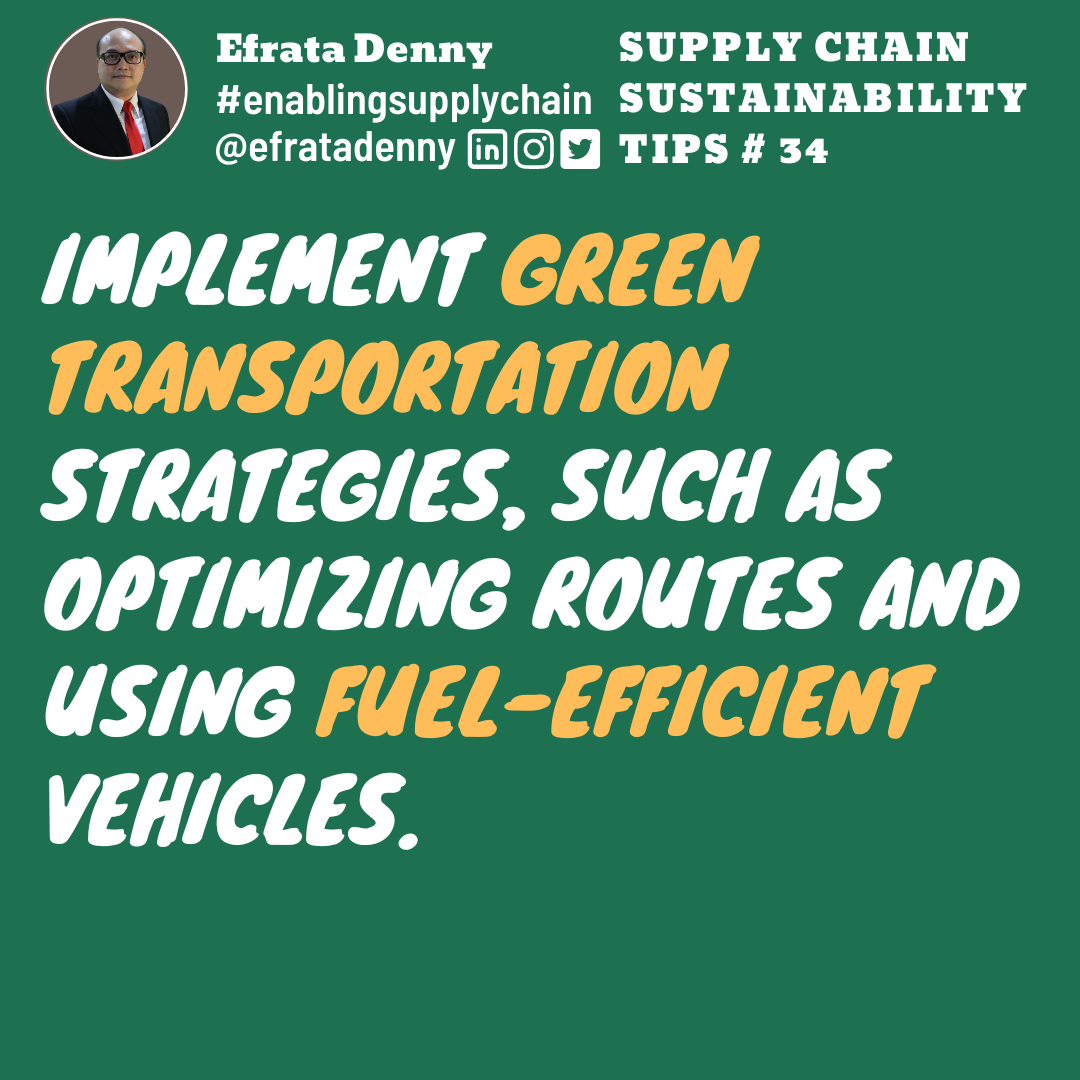
As the world focuses on building a sustainable future, implementing green transportation strategies is crucial for reducing carbon emissions and creating a sustainable supply chain. By optimizing routes and prioritizing fuel efficiency, companies can make a positive impact on the environment. In this article, we will explore practical tips for achieving green transportation within your supply chain.

  1. Route optimization: Utilize technology and data analytics to optimize delivery routes. By avoiding traffic congestion and optimizing stops, you can reduce mileage, improve fuel efficiency, and minimize carbon emissions. Route optimization not only saves fuel but also enhances overall operational efficiency.
  2. Load consolidation: Maximize vehicle capacity by consolidating shipments whenever possible. By reducing the number of trips required, you can minimize fuel consumption and carbon emissions. Load consolidation is an effective strategy for optimizing resources and reducing transportation-related environmental impacts.
  3. Modal shift: Consider alternative transportation modes, such as rail or waterways, for long-distance shipments. Compared to road transportation, these modes have lower carbon emissions per ton of freight. Shifting to more sustainable modes of transportation reduces the overall environmental impact of your supply chain.
  4. Fuel-efficient vehicles: Upgrade your fleet with fuel-efficient vehicles or explore the possibility of transitioning to electric or hybrid vehicles. Fuel-efficient vehicles reduce greenhouse gas emissions and decrease dependence on fossil fuels. Embracing sustainable vehicle options contributes to a cleaner and greener transportation system.
  5. Eco-driving practices: Promote eco-driving techniques among your drivers. Encourage smooth acceleration and braking, maintaining optimal speed, and minimizing idle time. These practices improve fuel efficiency, reduce carbon emissions, and contribute to a more sustainable supply chain.
  6. Last-mile delivery optimization: Optimize last-mile delivery by utilizing electric bikes, cargo bikes, or low-emission vehicles, especially in urban areas. These alternatives to traditional delivery vehicles significantly reduce pollution and alleviate traffic congestion, making last-mile delivery more sustainable.
  7. Collaborate with logistics partners: Work closely with logistics partners who share your commitment to reducing environmental impact. Collaborate on sustainable transportation practices, such as sharing resources, optimizing routes together, and exploring joint solutions to minimize carbon emissions.

By implementing green transportation strategies, companies can play a vital role in reducing carbon emissions, minimizing fuel consumption, and creating a sustainable supply chain. Through route optimization, load consolidation, modal shift, adopting fuel-efficient vehicles, promoting eco-driving practices, optimizing last-mile delivery, and collaborating with logistics partners, we can make significant progress toward a greener future. Let’s drive change together and build a sustainable transportation system that contributes to a cleaner and more sustainable planet. Embrace green transportation and be a catalyst for positive change!

Share this:

  • Share on Facebook (Opens in new window) Facebook
  • Share on X (Opens in new window) X
  • Share on LinkedIn (Opens in new window) LinkedIn
  • Email a link to a friend (Opens in new window) Email
  • Share on Tumblr (Opens in new window) Tumblr
  • Share on Pinterest (Opens in new window) Pinterest
Like Loading...

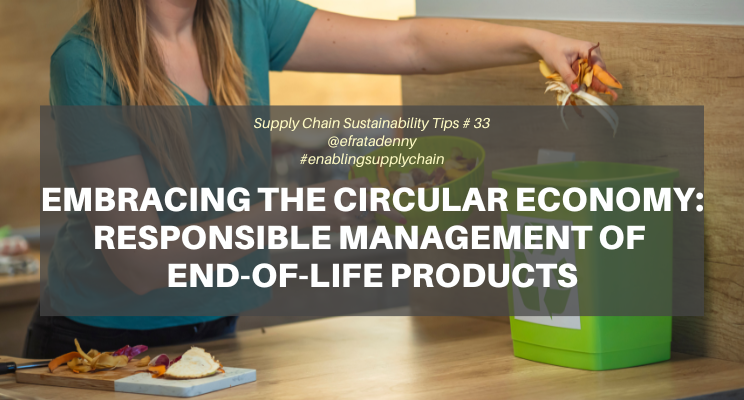
Embracing the Circular Economy: Responsible Management of End-of-Life Products

Posted by efratadenny on 30 June 2023
Posted in: Supply Chain, Sustainability. Tagged: enablingsupplychain, Supply Chain, Supply Chain Management, Sustainability, Sustainable. Leave a comment

As we strive to build a more sustainable future, it is essential to consider the end-of-life management of products. By adopting practices that promote repair, reuse, and recycling, we can reduce waste, conserve resources, and contribute to a circular economy. In this article, we will explore tips to make a positive impact by managing end-of-life products responsibly.

  1. Design for durability: One of the fundamental principles of the circular economy is designing products that are built to last. By using high-quality materials and durable construction techniques, we can extend the lifespan of products, reducing the need for frequent replacements and minimizing waste.
  2. Enable repairability: Design products with modular components and easily replaceable parts. This approach makes it easier for consumers to repair products instead of discarding them when a single component fails. Encouraging repairability promotes resource conservation and reduces the demand for new products.
  3. Promote product reuse: Encourage customers to reuse products or components. Implement buy-back programs, trade-in options, or incentives for returning and refurbishing items. By extending the life of products through reuse, we minimize waste and maximize their value.
  4. Implement recycling initiatives: Establish comprehensive recycling programs to manage end-of-life products responsibly. Develop systems to ensure that products are recycled or repurposed into new materials rather than being disposed of in landfills. This step contributes to a closed-loop system where materials are continuously circulated within the economy.
  5. Educate consumers: Raise awareness among customers about the importance of responsible product disposal. Provide guidance on recycling options available in their communities, encouraging them to make informed choices and actively participate in recycling initiatives.
  6. Collaborate with recycling partners: Partner with recycling organizations or local facilities to ensure proper recycling and recovery of materials. By collaborating with experts in the field, you can ensure that materials are processed efficiently and in an environmentally friendly manner, supporting a circular economy.
  7. Explore innovative solutions: Stay informed about emerging technologies and processes that enable efficient recycling, repurposing, or upcycling of materials. Embrace innovative solutions that contribute to the circular economy, such as advanced recycling techniques or alternative material sources.

By embracing the principles of the circular economy and managing end-of-life products responsibly, we can make a significant positive impact on the environment and the economy. Through designing for durability, enabling repairability, promoting reuse, implementing recycling initiatives, educating consumers, collaborating with recycling partners, and exploring innovative solutions, we contribute to a more sustainable future. Let’s close the loop and create a world where resources are conserved, waste is minimized, and the circular economy thrives. Embrace the circular economy and make a difference today!

Share this:

  • Share on Facebook (Opens in new window) Facebook
  • Share on X (Opens in new window) X
  • Share on LinkedIn (Opens in new window) LinkedIn
  • Email a link to a friend (Opens in new window) Email
  • Share on Tumblr (Opens in new window) Tumblr
  • Share on Pinterest (Opens in new window) Pinterest
Like Loading...

Choosing Sustainability: Selecting and Evaluating Suppliers with Care

Posted by efratadenny on 29 June 2023
Posted in: Supply Chain, Sustainability. Tagged: enablingsupplychain, Supply Chain, Supply Chain Management, Sustainability, Sustainable. Leave a comment

Building a responsible and sustainable supply chain starts with making conscious choices about the suppliers we work with. By incorporating sustainability criteria into the supplier selection and evaluation processes, businesses can drive positive change, promote environmental stewardship, and contribute to a more sustainable future. In this article, we will explore essential tips for selecting and evaluating suppliers with sustainability in mind.

  1. Define sustainability criteria: Begin by clearly defining the sustainability aspects that align with your values and goals. Consider environmental performance, social responsibility, ethical sourcing, and carbon footprint reduction as key factors. This step sets the foundation for evaluating suppliers based on their sustainability practices.
  2. Supplier assessment: When assessing suppliers, request information on their sustainability practices. Evaluate their environmental impact, labor standards, certifications, and overall commitment to sustainability. Look for suppliers who prioritize sustainable practices and demonstrate a genuine dedication to minimizing their environmental and social footprint.
  3. Supplier collaboration: Engage suppliers in sustainability discussions and encourage them to adopt sustainable practices. Foster a collaborative approach where you can share your sustainability goals and work together to find innovative solutions. By involving suppliers in the process, you can drive positive change throughout the supply chain.
  4. Supplier audits: Regularly conduct audits to evaluate supplier compliance with sustainability criteria. These audits should assess their adherence to environmental and social standards, ensuring that suppliers meet the required sustainability benchmarks. The audits should also facilitate ongoing improvements and foster a culture of continuous sustainability enhancement.
  5. Long-term partnerships: Foster long-term partnerships with suppliers who share your sustainability vision. By working together with aligned suppliers, you can develop shared goals and strategies for driving sustainability. Long-term partnerships enable collaboration, knowledge sharing, and joint efforts to create a more responsible supply chain.
  6. Supplier education: Provide guidance and resources to suppliers to help them improve their sustainability practices. Offer training programs, share best practices, and provide support to enhance their understanding and implementation of sustainable initiatives. Supplier education promotes the growth of sustainable practices throughout the supply chain.
  7. Transparent reporting: Encourage suppliers to transparently report their sustainability performance. Ask for key metrics, progress updates, and sustainability initiatives they have undertaken. Transparent reporting promotes accountability and allows for collective improvement as both parties can learn from each other’s experiences and successes.

Incorporating sustainability criteria into supplier selection and evaluation processes is a crucial step towards building a responsible and sustainable supply chain. By defining sustainability criteria, conducting thorough assessments, fostering collaboration, conducting audits, establishing long-term partnerships, providing education, and encouraging transparent reporting, businesses can make informed choices and drive positive change in the supply chain. Let’s choose sustainability together and create a brighter, more sustainable future.

Share this:

  • Share on Facebook (Opens in new window) Facebook
  • Share on X (Opens in new window) X
  • Share on LinkedIn (Opens in new window) LinkedIn
  • Email a link to a friend (Opens in new window) Email
  • Share on Tumblr (Opens in new window) Tumblr
  • Share on Pinterest (Opens in new window) Pinterest
Like Loading...

Posts navigation

← Older Entries
Newer Entries →
  • Yes You Can Search

  • Yes This is Calendar

    February 2026
    M T W T F S S
     1
    2345678
    9101112131415
    16171819202122
    232425262728  
    « Sep    
  • Yes These are Archives

  • Yes Recent Posts

    • The Future of Supply Chain: How AI and Automation Are Revolutionizing the Industry
    • Top 10 Supply Chain Innovations to Watch in 2024
    • The Rise of Sustainable Supply Chains: Why Going Green is Now a Business Imperative
    • The Great Debate: Centralized vs. Decentralized Supply Chains—Which is Better for 2024?
    • The Paradox of Supply Chain and Logistics
    • Agility Unleashed: The Power of Continuous Evaluation in Procurement Strategy
    • Cost Clarity: Mastering Total Cost of Acquisition for Procurement Excellence
    • Strategic Sourcing Mastery: Unleashing Procurement Excellence through Consolidated Purchasing
    • Unleashing Operational Excellence Through Just-in-Time (JIT) Inventory Management
    • Revolutionizing Procurement: The Strategic Impact of Harnessing Reverse Auctions for Maximum Cost Savings
  • Yes Follow Me

    Post a Day 2012 Twitter EfrataDenny
  • Yes This is My Twitter

    Tweets by efratadenny
  • Yes Advertising

    Roppopo.com
  • Yes This is Category

    Australia Bali Bandung China Collection Food France Indonesia Intermezzo Jakarta Kraft Foods Leadership Lighting Experiences Liquidart Manado Management Model Online Store Photography Portfolio Press Procurement Still Life Supply Chain Sustainability Traveling Underwater Wines Yes This is Me
  • Enter your email address to follow this blog and receive notifications of new posts by email.

    Join 986 other subscribers
  • Flickr Photos

    Last Supper Wood EngravingChristmas SockChristmas Bell
    More Photos
  • Recent Comments

    Bogdan Kolos's avatarBogdan Kolos on The Power of Strong Supplier R…
    Reighne Sq's avatarReighne Sq on Weekly Photo Challenge: One Sh…
    Shubham's avatarShubham on Long Tail and Short Tail Red…
    Terrence M's avatarTerrence M on Fettuccine Carbonara
    Ivan's avatarIvan on Maria Clara Sangria Red W…
    wahyu jatmiko krisdiyanto's avatarwahyu jatmiko krisdi… on Mie Bakso
    Weekly Photo Challen… on Weekly Photo Challenge: F…
    bali ratih's avatarbali ratih on Diving at Benoa
    Berita Hari Ini's avatarBerita Hari Ini on Miss Indonesia will increase W…
    geraldine's avatargeraldine on Maria Clara Sangria Red W…
    Chika Lesmana's avatarChika Lesmana on Shanghai Ice
    Chika Lesmana's avatarChika Lesmana on Shanghai Ice
    ipah kholipah's avataripah kholipah on Shanghai Ice
    Evi's avatarEvi on Platinum Hill Limited Edition…
    renxkyoko's avatarrenxkyoko on Sirloin Steak
  • Yes Page Info

    Yahoo bot last visit Msn bot last visit Google PageRank Checker

    The best of travel stories in and around Singapore TravelerVoice Bloggers - Meet Millions of Bloggers Personal Blogs visitor counters
  • Yes Facebook

    Yes Facebook
Create a free website or blog at WordPress.com.
Efrata Denny
Create a free website or blog at WordPress.com.
Privacy & Cookies: This site uses cookies. By continuing to use this website, you agree to their use.
To find out more, including how to control cookies, see here: Cookie Policy
  • Subscribe Subscribed
    • Efrata Denny
    • Join 966 other subscribers
    • Already have a WordPress.com account? Log in now.
    • Efrata Denny
    • Subscribe Subscribed
    • Sign up
    • Log in
    • Report this content
    • View site in Reader
    • Manage subscriptions
    • Collapse this bar
 

Loading Comments...
 

    %d