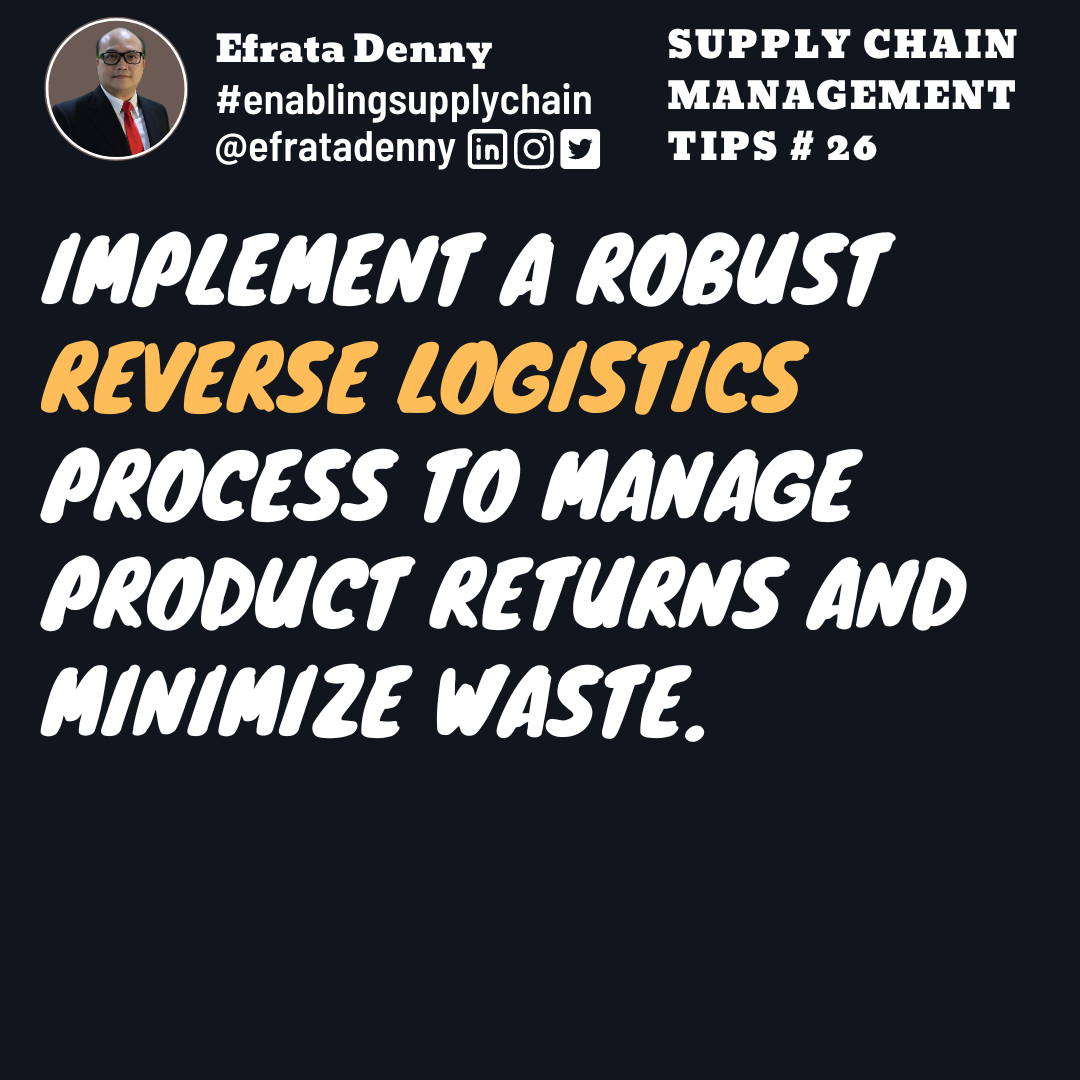
“Implement a robust reverse logistics process to manage product returns and minimize waste.” – Efrata Denny
Product returns have long been a part of the business landscape, and while they can pose challenges, they also hold untapped potential. That’s where a robust reverse logistics process comes into play, offering a strategic approach to handling returns that minimizes waste and maximizes value. In today’s dynamic market, customer expectations are higher than ever, and how you manage returns can have a lasting impact on customer satisfaction, operational efficiency, and sustainability.
The Tip of the Day: Embrace the power of a robust reverse logistics process to effectively manage product returns and transform challenges into opportunities for your supply chain.
The conventional approach to product returns often involves discarding returned items, which can lead to unnecessary waste and associated costs. However, by implementing a well-designed reverse logistics process, you can navigate returns with precision, recovering value from returned items while minimizing their environmental impact. This not only aligns with sustainability goals but also contributes to improved operational efficiency and customer loyalty.
Advantages of a Robust Reverse Logistics Process
1. Effective Product Return Management:
A well-structured reverse logistics process enables you to efficiently handle product returns, minimizing the impact on your operations and ensuring smooth transitions.
2. Minimized Waste and Environmental Impact:
By refurbishing, repairing, or reselling returned items, you reduce waste and contribute to a more sustainable supply chain, ultimately benefiting the environment.
3. Value Recovery Through Refurbishment or Reselling:
Rather than considering returned items as losses, a robust reverse logistics process allows you to recover value from these items by refurbishing or reselling them, adding to your bottom line.
4. Improved Customer Experience and Loyalty:
Effective return management enhances the customer experience by providing hassle-free returns, boosting customer trust and loyalty.
5. Enhanced Operational Efficiency:
Streamlining the return process contributes to better operational efficiency, reducing the time and resources required to handle returns and allowing your team to focus on value-added activities.
In a world where sustainability and customer satisfaction are paramount, a strong reverse logistics process is no longer just an option—it’s a necessity. By treating returns as opportunities rather than setbacks, you can reshape your supply chain, turning challenges into moments of value creation. Through refurbishment, repair, or reselling, you extend the lifecycle of products and minimize their impact on the environment.
Don’t let returns go to waste. Embrace the power of robust reverse logistics to reduce waste, maximize value, and enhance the sustainability of your supply chain. With a proactive approach to returns, you’re not just managing products; you’re cultivating opportunities that contribute to a more efficient, customer-centric, and sustainable supply chain ecosystem.
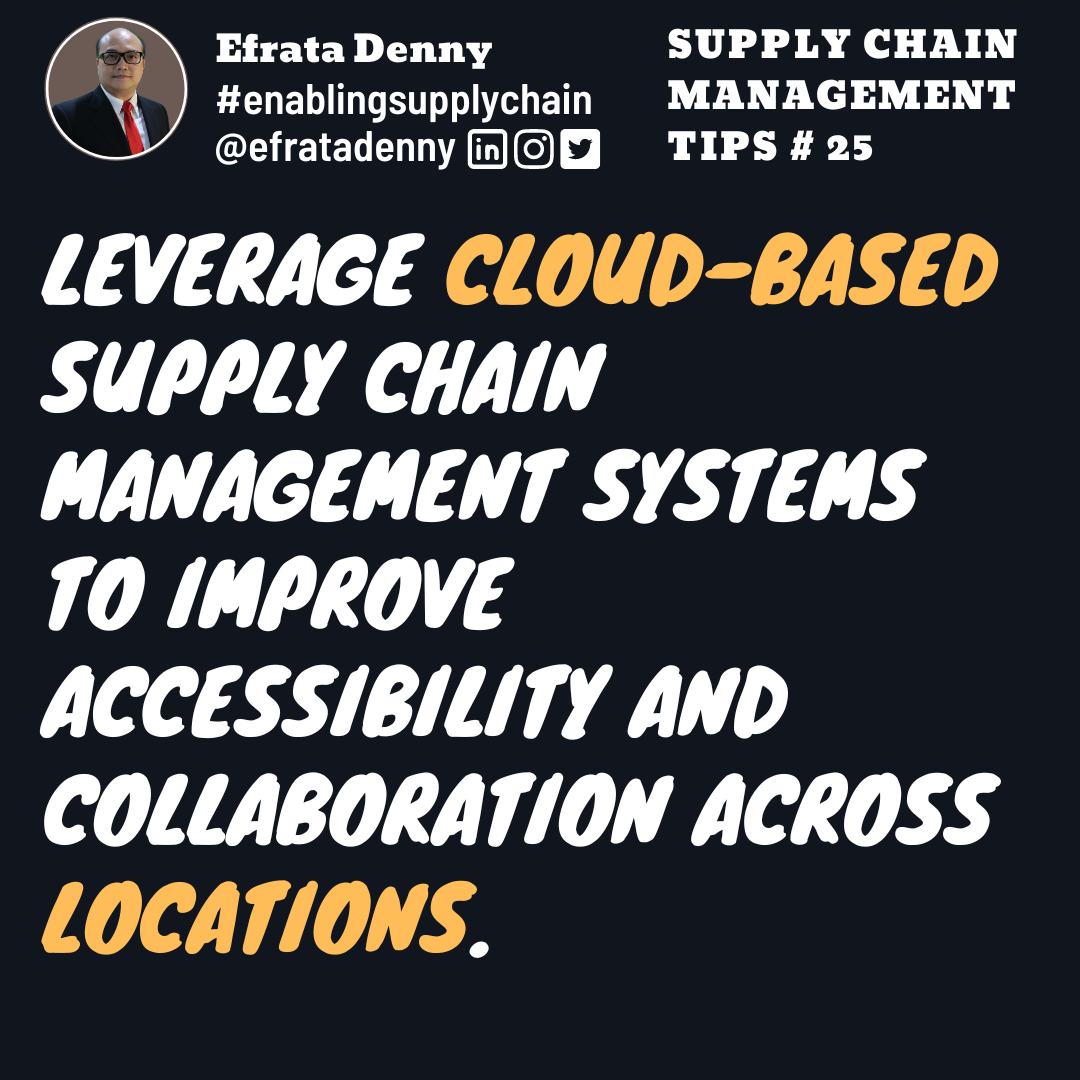
“Leverage cloud-based supply chain management systems to improve accessibility and collaboration across locations.” – Efrata Denny
In today’s fast-paced and interconnected business landscape, the success of a supply chain hinges on its ability to adapt, collaborate, and respond to ever-changing demands. One of the most impactful ways to achieve this agility is by leveraging cloud-based supply chain management systems. Cloud technology has reshaped the way businesses operate, enabling seamless collaboration, real-time data access, and enhanced efficiency. If you’re looking to break down geographical barriers, optimize your processes, and future-proof your supply chain, it’s time to explore the vast potential of cloud-based solutions.
1. The Power of Cloud-Based Supply Chain Management
At its core, cloud-based supply chain management harnesses the power of remote servers to store and manage data and applications. This technology enables your teams to access critical information, collaborate, and make informed decisions from any location with an internet connection. Gone are the days of being tied to a specific office or site—now, you can foster collaboration and streamline operations across multiple locations effortlessly.
2. Breaking Down Geographical Barriers
The traditional challenges of coordinating supply chain activities across different locations are no longer insurmountable. Cloud-based supply chain management allows you to transcend geographical boundaries and establish a cohesive network of communication. With a cloud-based system, your teams from different offices, warehouses, or even countries can access the same data in real-time, fostering seamless collaboration and efficient decision-making.
3. Real-Time Insights and Analytics
In a rapidly evolving market, having access to real-time data insights is a game-changer. Cloud-based supply chain management systems provide you with the ability to monitor your operations, track performance, and gain valuable insights into various aspects of your supply chain. Whether it’s tracking inventory levels, analyzing demand trends, or evaluating supplier performance, these systems empower you to make informed decisions based on up-to-the-minute data.
4. Seamless Collaboration for Enhanced Efficiency
Efficiency is the heartbeat of a successful supply chain. Cloud-based systems facilitate seamless collaboration among your teams, partners, and stakeholders. By centralizing data and communication, you eliminate silos and ensure that everyone is on the same page. Collaborative workflows become the norm, allowing for faster problem-solving, quicker response times, and improved overall efficiency.
5. Scalability for Future Growth
As your business evolves, your supply chain must adapt to accommodate growth. Cloud-based supply chain management systems offer scalability that traditional on-premises solutions can’t match. Whether you’re expanding your operations, adding new partners, or entering new markets, cloud technology allows you to scale your systems quickly and efficiently, without the need for significant infrastructure investments.
6. Cost Savings and Reduced IT Burden
Maintaining on-premises IT infrastructure can be costly and resource-intensive. Cloud-based solutions offer a more cost-effective alternative. You can eliminate the need for extensive hardware and software installations, ongoing maintenance, and upgrades. Instead, you pay for the services you use, allowing you to allocate resources strategically and focus on driving value rather than managing IT logistics.
7. Security and Reliability
Concerns about security are understandable when considering cloud solutions. However, reputable cloud service providers invest heavily in data security and compliance. Cloud-based supply chain management systems often offer robust security features, including data encryption, regular backups, and compliance with industry standards. Moreover, cloud systems tend to have better disaster recovery capabilities, ensuring business continuity in the face of disruptions.
8. Embrace the Future of Supply Chain Management
In a world where agility and collaboration are paramount, cloud-based supply chain management systems provide the foundation for success. The benefits are clear: breaking down geographical barriers, accessing real-time insights, fostering seamless collaboration, scalability for growth, cost savings, and enhanced security. The cloud isn’t just a technological advancement—it’s a strategic tool that empowers your supply chain to thrive in today’s dynamic business environment.
The era of cloud technology has ushered in a new era of supply chain management. By embracing cloud-based solutions, you empower your teams to work together regardless of location, make data-driven decisions, and streamline processes for maximum efficiency. The cloud is not just a trend—it’s a transformative force that can redefine how you approach supply chain management. So, why wait? Embrace the cloud and unlock the full potential of your supply chain for a brighter and more successful future.
“Use track and trace technologies to monitor and manage the movement of goods throughout the supply chain.” – Efrata Denny
In the intricate dance of supply chain management, visibility reigns supreme. Ensuring smooth operations, accurate inventory management, and an exceptional customer experience hinges on the ability to track and trace the movement of goods. This blog post dives into the significance of integrating track and trace technologies into your supply chain, the array of benefits they bring, and how they can revolutionize your operations.
1. The Need for Visibility in Supply Chains
In a globalized and complex supply chain landscape, maintaining a clear view of the entire journey of goods is more important than ever. From manufacturing to distribution, real-time insights into the whereabouts of products enable proactive decision-making and efficient problem-solving.
2. Understanding Track and Trace Technologies
Track and trace technologies utilize cutting-edge solutions like RFID (Radio Frequency Identification) and barcode systems to monitor and manage the movement of goods. These technologies offer real-time visibility, enabling businesses to track the progress of their products throughout the supply chain.
3. Real-Time Insights for Enhanced Inventory Management
Implementing track and trace technologies equips supply chain professionals with accurate and up-to-date inventory information. Reduced stockouts, optimized inventory levels, and improved demand forecasting are among the benefits that can be achieved by harnessing the power of real-time data.
4. Effortless Supply Chain Planning and Optimization
Track and trace technologies provide a wealth of data that can be harnessed for strategic decision-making. Businesses can use this data to identify inefficiencies, optimize routes, and streamline operations, leading to cost savings and improved operational efficiency.
5. Security, Risk Mitigation, and Customer Satisfaction
In a world where supply chain security is paramount, track and trace technologies offer enhanced security measures. Moreover, the ability to quickly identify issues or disruptions allows for prompt intervention and mitigation, safeguarding the supply chain from potential risks. This level of control ultimately contributes to an improved customer experience and higher satisfaction rates.
The integration of track and trace technologies is a game-changer for modern supply chains. With the power to provide real-time visibility, optimize operations, enhance security, and deliver an exceptional customer experience, these technologies are essential for businesses looking to thrive in today’s competitive landscape. From preventing disruptions to ensuring the seamless flow of goods, track and trace technologies empower supply chain professionals to make informed decisions and drive success at every stage.
So, whether you’re a manufacturer, distributor, or retailer, consider the impact of track and trace technologies on your supply chain. Embrace the future of efficient operations, real-time insights, and enhanced customer satisfaction. Step into a new era of supply chain management, where visibility leads to excellence.
“Embrace agile methodologies to enhance flexibility and responsiveness in your supply chain operations.”
Efrata Denny
In the ever-evolving landscape of supply chain management, one principle stands out as crucial: agility. In a world marked by rapid shifts and unpredictable changes, embracing agile methodologies is not just an option—it’s a strategic imperative that can determine the success of your supply chain operations. This blog post explores the significance of adopting agile methodologies, the benefits they bring, and how organizations can leverage them to thrive in a dynamic business environment.
1. The Demand for Agility in Supply Chain
Modern supply chains face constant challenges: changing consumer preferences, global disruptions, and the need for rapid adaptation. Embracing agility allows organizations to confront these challenges head-on, responding swiftly to shifts in market demands and staying competitive.
2. Agile Methodologies Unveiled
Agile methodologies, inspired by software development practices, are designed to foster flexibility, collaboration, and rapid responses to change. Approaches like Agile and Scrum emphasize iterative development, continuous improvement, and the ability to pivot based on real-time insights.
3. Breaking Down Silos, Building Collaboration
Agile methodologies encourage cross-functional collaboration by breaking down traditional silos and promoting open communication among various departments. This creates a holistic view of supply chain processes, enabling quicker and more informed decision-making.
4. Responding to Market Dynamics
Agile supply chains can quickly adjust to market changes, enabling organizations to seize new opportunities or mitigate risks as they emerge. The ability to adapt, combined with a focus on customer value, allows for a better response to shifting consumer demands.
5. Continuous Improvement and Customer Value
Agile methodologies emphasize continuous improvement, with regular iterations and refinements. This approach not only optimizes processes but also delivers enhanced customer value. By adapting to customer needs and preferences, organizations can provide exceptional experiences that build brand loyalty.
In a world where change is constant and challenges are dynamic, supply chain agility is a distinguishing factor that separates thriving organizations from those struggling to keep up. Embracing agile methodologies is a transformative approach that encourages flexibility, cross-functional collaboration, and rapid responses to market dynamics. By adopting principles from Agile and Scrum, organizations can streamline processes, reduce lead times, and continuously deliver customer value.
So, whether you’re managing supply chain disruptions or aiming to stay ahead of evolving trends, agile methodologies provide the framework to navigate success. Break free from rigid processes, embrace change, and build a supply chain that’s not just responsive, but anticipates and shapes the future. Embrace agility and fuel your supply chain’s journey toward excellence in today’s dynamic business landscape!
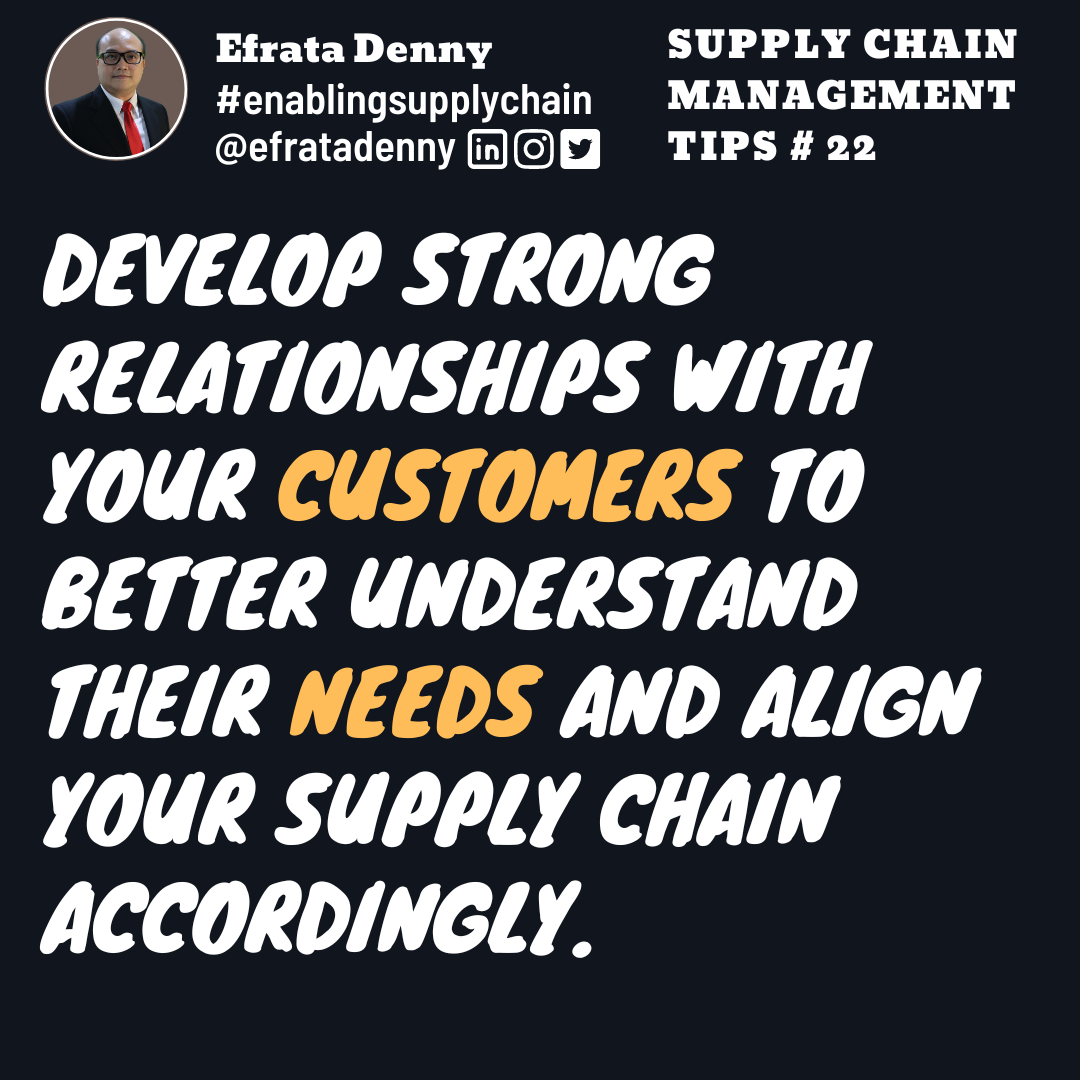
“Develop strong relationships with your customers to better understand their needs and align your supply chain accordingly.”
Efrata Denny
In today’s intricate business landscape, the relationship between a company and its customers is no longer a one-way street. Customer-centricity has become a hallmark of successful enterprises, and nowhere is this more apparent than in supply chain management. Building and nurturing strong relationships with customers is no longer an option—it’s a strategic imperative that drives supply chain success. In this article, we’ll delve into the significance of developing robust customer relationships, the benefits they offer, and how organizations can align their supply chain practices to meet and exceed customer expectations.
1. The Foundation of Customer-Centric Success
Gone are the days when supply chains were purely transactional. Today, customers demand a seamless experience that extends beyond the product itself. Building strong relationships allows organizations to tap into customer insights, preferences, and evolving needs, setting the stage for collaboration and mutual growth.
2. The Virtuous Cycle of Engagement
Engaging with customers fosters a deep understanding of their preferences, behaviors, and pain points. This valuable insight enables organizations to tailor their supply chain processes, from demand forecasting to delivery strategies, to precisely match customer expectations. As customers feel understood, their loyalty and satisfaction naturally grow.
3. Agility Through Responsiveness
Strong customer relationships lead to enhanced supply chain responsiveness. Organizations can swiftly adapt to shifts in customer demand, market trends, or unforeseen disruptions. This agility ensures that the supply chain remains aligned with customer expectations, resulting in improved delivery times and customer satisfaction.
4. Customer Satisfaction and Loyalty
Customer satisfaction is the cornerstone of loyalty. By consistently exceeding customer expectations, organizations foster a loyal customer base that not only provides repeat business but also advocates for the brand. This loyalty translates to positive word-of-mouth marketing and an expanded customer reach.
5. Informed Decision-Making and Collaborative Partnerships
Engaged customers provide valuable feedback and insights that can guide strategic decision-making. By collaborating closely with customers, organizations can refine their offerings, optimize supply chain processes, and create products and services that resonate deeply with their target audience.
In the intricate dance of supply chain management, the harmonious relationship between an organization and its customers takes center stage. Developing strong customer relationships is a dynamic strategy that transcends traditional boundaries, propelling organizations toward supply chain excellence and sustained success. By actively listening, adapting, and collaborating, organizations not only meet customer expectations but consistently exceed them, creating a virtuous cycle of customer satisfaction and loyalty.
So, don’t view customers as mere recipients—embrace them as valued partners on the journey toward supply chain success. Develop strong relationships, harness their insights, and tailor your supply chain to deliver exceptional value that goes beyond products and services. The result? A supply chain that’s not just functional, but a driving force for mutual growth and customer-centric achievement.














 Efrata Denny