Efrata Denny

Personal Blog contains Wines, Foods, Traveling, and Photography

  • Home
  • All About Me
    • Yes This is Me
    • Private Message
    • Guest Book
    • Collection
      • Cigars
      • IntermezZo
      • Liquors
      • Sketch
      • Zombie Story
    • Friends
    • Portfolio
      • Kraft Foods
      • Arnott’s
      • Glaxo Smith Kline
      • Online Store
    • Press
  • Wines
    • Argentina
    • Australia
    • Austria
    • Chile
    • France
    • Indonesia
    • Israel
    • Italia
    • Portugal
    • South Africa
    • Spain
    • USA
    • Vietnam
  • Food
  • Traveling
    • Australia
    • China
    • Hong Kong
    • Indonesia
    • Macau
    • Malaysia
    • Philippines
    • Singapore
    • Thailand
    • Vietnam
  • Photography
    • Model
    • Still Life
    • Liquidart
    • Underwater
  • Awards
  • Supply Chain
    • Sustainability
    • Workshop

Responsible and Resourceful: Fostering Accountability and Ownership in the Supply Chain

Posted by efratadenny on 8 January 2024
Posted in: Leadership, Supply Chain. Tagged: enablingsupplychain, Leadership, Supply Chain, Supply Chain Leadership, Supply Chain Management. Leave a comment

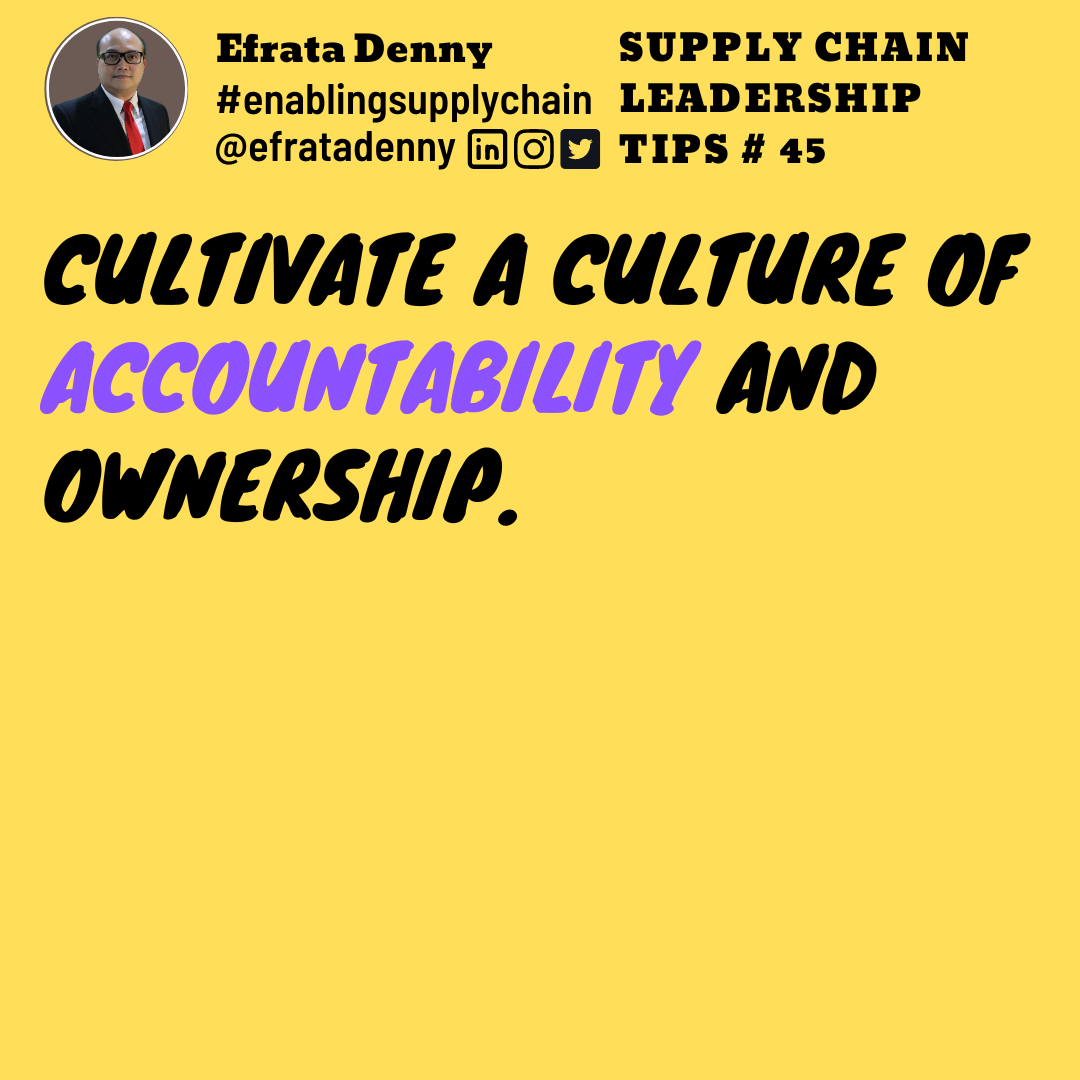
“Cultivate a culture of accountability and ownership.” – Efrata Denny

In the dynamic world of supply chain management, accountability and ownership are the linchpins of success. A culture that embraces these principles empowers individuals and teams to take responsibility for their actions, make informed decisions, and drive results. In this article, we’ll explore ten valuable tips to help you cultivate a culture of accountability and ownership within your organization. By instilling these practices, you can boost the efficiency of your supply chain, enhance collaboration, and foster a sense of pride and dedication among your team members.

1. Set Clear Expectations

The foundation of a culture of accountability and ownership begins with setting clear expectations. Define specific goals, objectives, and performance expectations for individuals and teams. Ensure that everyone understands their roles and responsibilities, as well as the impact of their actions on the overall supply chain. Clarity and alignment are essential.

2. Lead by Example

Leaders play a pivotal role in shaping the culture of an organization. To foster accountability and ownership, lead by example. Demonstrate these principles in your own actions and decisions. Be transparent, take responsibility for mistakes, and hold yourself to the same standards you expect from others. Your leadership sets the tone for the entire team.

3. Encourage Proactive Problem-Solving

Accountability and ownership thrive in an environment that encourages proactive problem-solving. Empower individuals to identify and address issues before they escalate. Give them the autonomy to find innovative solutions and take ownership of the entire problem-solving process. This not only resolves challenges swiftly but also strengthens their sense of responsibility.

4. Foster Open Communication

Open and honest communication is the lifeblood of an accountable and ownership-driven culture. Create an environment where individuals feel safe to speak up, share their ideas, and provide constructive feedback. Promote active listening and collaboration across all levels of the organization. A free flow of information strengthens accountability and empowers team members to take ownership of their decisions and actions.

5. Provide Resources and Support

Ensure that your team has the necessary resources, tools, and training to fulfill their responsibilities effectively. Offer guidance, mentorship, and support to help individuals succeed in their roles. When team members feel adequately equipped, they’re more likely to take ownership of their tasks and drive results.

6. Establish Performance Metrics

To measure and reinforce accountability, implement performance metrics aligned with organizational goals. Set SMART (Specific, Measurable, Achievable, Relevant, Time-bound) goals and regularly track progress. Celebrate achievements and address performance gaps. This creates a culture where individuals feel responsible for their outcomes and are motivated to achieve results.

7. Recognize and Reward Accountability

Acknowledge and reward individuals who demonstrate accountability and ownership in their work. Celebrate successes and publicly recognize those who take initiative and go above and beyond. Rewards and recognition not only reinforce these values but also inspire others to follow suit.

8. Foster a Learning Culture

A culture of accountability and ownership thrives in a learning environment. Encourage continuous growth within your organization. Provide opportunities for professional development, training, and knowledge sharing. Emphasize the importance of learning from mistakes and embracing new challenges. When individuals see learning and growth as part of their responsibility, they are more likely to take ownership of their development.

9. Embrace Empowerment

Empower your team by delegating decision-making authority and allowing individuals to take ownership of their tasks. Encourage autonomy, creativity, and innovation while maintaining accountability for outcomes. When team members have the autonomy to make decisions, they are more likely to feel a sense of ownership and responsibility.

10. Continuously Evaluate and Improve

Lastly, a culture of accountability and ownership is not static; it’s a dynamic system that requires ongoing evaluation and improvement. Regularly assess the effectiveness of your accountability and ownership initiatives. Solicit feedback from your team, assess the impact on performance, and make adjustments as needed. This commitment to continuous improvement ensures that the culture remains strong and relevant.

Cultivating a culture of accountability and ownership is a powerful catalyst for success in the supply chain. It empowers team members to take ownership of their work, make informed decisions, and drive results. By instilling these practices within your organization, you can enhance efficiency, collaboration, and overall performance. Share these strategies with your supply chain network to build a culture of accountability and ownership that propels your organization toward excellence.
Share this:

  • Click to share on Facebook (Opens in new window) Facebook
  • Click to share on X (Opens in new window) X
  • Click to share on LinkedIn (Opens in new window) LinkedIn
  • Click to email a link to a friend (Opens in new window) Email
  • Click to share on Tumblr (Opens in new window) Tumblr
  • Click to share on Pinterest (Opens in new window) Pinterest
Like Loading...

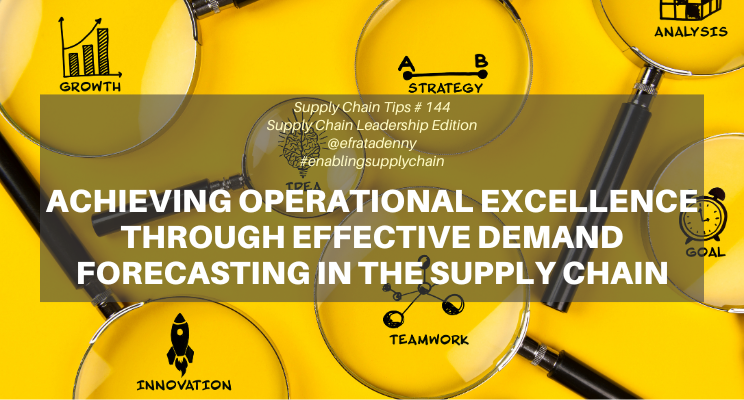
Achieving Operational Excellence through Effective Demand Forecasting in the Supply Chain

Posted by efratadenny on 7 January 2024
Posted in: Leadership, Supply Chain. Tagged: enablingsupplychain, Leadership, Supply Chain, Supply Chain Leadership, Supply Chain Management. Leave a comment

“Implement effective demand planning and forecasting processes.” – Efrata Denny

Accurate demand planning and forecasting are essential for modern supply chains aiming to optimize inventory, reduce costs, and enhance customer satisfaction. These processes enable organizations to efficiently align their operations with actual market demand, avoid overstocking or understocking, and respond effectively to changes in customer preferences and market dynamics. In this article, we’ll explore ten valuable tips to help you implement effective demand planning and forecasting processes that empower your supply chain to excel.

1. Analyze Historical Data

The foundation of effective demand planning and forecasting lies in historical data analysis. By scrutinizing past sales data, you can identify patterns, trends, and seasonality. Uncover significant factors that influence demand fluctuations, such as holiday seasons, promotional campaigns, or market events. This historical context is the starting point for building reliable forecasts.

2. Collaborate with Sales and Marketing

Effective forecasting involves collaboration and knowledge sharing between supply chain teams, sales, and marketing departments. These teams have valuable insights into market intelligence and customer feedback. By working together, you can ensure that your demand forecasts are enriched with real-world market data, improving their accuracy.

3. Utilize Statistical Models

Leverage statistical models to forecast future demand. Time series analysis, regression analysis, and moving averages are among the quantitative techniques at your disposal. However, it’s important to recognize that forecasting isn’t solely a numbers game. Combining these statistical approaches with qualitative inputs provides a holistic view that’s better equipped to capture the complexities of the market.

4. Incorporate External Factors

Market dynamics are influenced by various external factors, including trends, competitor activities, and economic indicators. Staying informed about industry news and changes is vital. Incorporate this external data into your forecasts to ensure they reflect the broader market environment.

5. Leverage Technology and Data Analytics

In today’s data-driven world, there are advanced demand planning software and tools that harness the power of algorithms and data analytics. These technologies automate processes, analyze vast datasets, and improve forecast accuracy. Explore these solutions to streamline and enhance your forecasting practices.

6. Collaborate with Suppliers and Customers

A synchronized supply chain extends beyond your organization. Engaging with suppliers and customers can provide valuable insights into the supply and demand relationship. Collaborate on promotional planning, share forecast information, and explore opportunities for joint forecasting. This collaborative approach helps create a more accurate picture of future demand.

7. Monitor Demand Signals in Real-Time

Real-time monitoring of demand signals is crucial for agile supply chain management. Utilize sources like point-of-sale data, customer orders, and market research to identify changes in demand as they occur. This enables swift adjustments to inventory levels and ensures customer satisfaction.

8. Conduct Scenario Analysis

Anticipate and prepare for various scenarios by conducting scenario analysis. This technique allows you to assess the potential impact of different demand scenarios on your supply chain. By evaluating the effects of demand fluctuations, supply disruptions, or market uncertainties, you can develop contingency plans to maintain operational efficiency.

9. Review and Refine Forecasts

Regularly reviewing forecast accuracy and performance metrics is essential. This ongoing analysis helps identify areas for improvement. It also provides valuable opportunities to learn from past errors and to continuously refine your forecasting models and processes.

10. Foster a Culture of Continuous Improvement

Finally, cultivate a culture of continuous improvement within your demand planning team. Emphasize the importance of learning from past experiences, embracing new technologies, and staying agile in response to changing market dynamics. A culture that encourages adaptation and innovation will help your supply chain stay ahead of the curve.

Effective demand planning and forecasting are the cornerstones of a successful supply chain. By implementing these ten tips, you can enhance your forecasting accuracy, optimize inventory management, and respond proactively to market changes. Share these strategies with your supply chain network to unlock the full potential of accurate demand forecasting and empower your supply chain for sustained success.

Share this:

  • Click to share on Facebook (Opens in new window) Facebook
  • Click to share on X (Opens in new window) X
  • Click to share on LinkedIn (Opens in new window) LinkedIn
  • Click to email a link to a friend (Opens in new window) Email
  • Click to share on Tumblr (Opens in new window) Tumblr
  • Click to share on Pinterest (Opens in new window) Pinterest
Like Loading...

Driving Efficiency and Profitability: The Role of Financial Acumen in the Supply Chain

Posted by efratadenny on 6 January 2024
Posted in: Leadership, Supply Chain. Tagged: enablingsupplychain, Leadership, Supply Chain, Supply Chain Leadership, Supply Chain Management. Leave a comment

“Develop strong financial acumen to optimize cost management.” – Efrata Denny

In today’s dynamic supply chain landscape, effective cost management is paramount for success. Supply chain professionals must possess strong financial acumen to optimize costs, enhance profitability, and make informed decisions. Understanding the intricacies of cost drivers, analyzing cost structures, and implementing cost-effective procurement strategies are essential steps in this journey. Let’s explore ten tips that can help you develop your financial skills and transform your supply chain operations.

1. Understanding Cost Drivers

Begin your journey into financial acumen by gaining a deep understanding of the cost drivers within your supply chain. These are the fundamental factors that significantly impact costs, such as raw materials, transportation, inventory holding, and labor expenses. By pinpointing these key cost drivers, you’ll be better equipped to manage and optimize your expenses effectively.

2. Analyzing Cost Structures

To optimize costs, you need to break them down into their constituent parts. Analyze your cost structures by categorizing expenses and evaluating their contribution to the overall budget. This granular analysis allows you to identify areas where cost savings and improvements are possible.

3. Implementing Cost-Effective Procurement Strategies

Strategic procurement is a powerful tool for optimizing costs. Develop and implement procurement practices that focus on cost savings. Negotiate favorable contracts, leverage volume discounts, and explore alternative sourcing options to reduce your supply chain expenses.

4. Monitoring and Controlling Expenses

Robust expense monitoring systems are essential for tracking and controlling spending across your supply chain. Establish clear processes for regularly reviewing budgets, analyzing variances, and taking corrective actions when necessary. This active cost control ensures that your finances remain on track.

5. Conducting Cost-Benefit Analysis

Before making significant decisions or investments, always conduct a comprehensive cost-benefit analysis. This analysis evaluates the potential financial impact, including both short-term and long-term costs and benefits. It’s a critical step in making informed choices for your supply chain.

6. Embracing Lean Principles

Lean principles can help you eliminate waste and inefficiencies in your supply chain processes. Streamline operations, reduce unnecessary inventory, optimize transportation routes, and eliminate non-value-added activities to drive cost reduction without sacrificing quality.

7. Collaborating with Finance Professionals

A close collaboration with your finance team or finance professionals can provide invaluable insights into financial analytics and reporting. Understand financial statements, cash flow analysis, and profitability metrics to enhance your financial acumen and decision-making.

8. Identifying Cost Reduction Opportunities

Continuous improvement is at the heart of effective cost management. Continuously seek opportunities to reduce costs without compromising quality or customer satisfaction. Explore alternative suppliers, optimize resource allocation, and improve operational efficiency to drive cost reduction.

9. Staying Informed About Market Trends

Supply chain costs are often influenced by external factors such as market trends, industry benchmarks, and economic conditions. Stay updated on these factors and anticipate changes in commodity prices, exchange rates, and regulatory requirements. This proactive approach enables you to make well-informed financial decisions.

10. Continuously Learning and Improving

Lastly, invest in your financial knowledge and skills through training, certifications, or professional development programs. The financial landscape is constantly evolving, so staying up-to-date with the latest practices and techniques is vital for optimizing cost management.

By developing strong financial acumen, supply chain professionals can drive cost optimization, improve profitability, and make informed decisions. This newfound financial expertise empowers you to navigate the complexities of cost management and contribute to the overall success of your supply chain operations. Share these tips with your supply chain network, and together, you can harness the power of financial management in your operations. Financial acumen isn’t just a skill; it’s a key driver of supply chain excellence.

Share this:

  • Click to share on Facebook (Opens in new window) Facebook
  • Click to share on X (Opens in new window) X
  • Click to share on LinkedIn (Opens in new window) LinkedIn
  • Click to email a link to a friend (Opens in new window) Email
  • Click to share on Tumblr (Opens in new window) Tumblr
  • Click to share on Pinterest (Opens in new window) Pinterest
Like Loading...

Eco-Packaging and Shipping: The Key to a Sustainable Supply Chain

Posted by efratadenny on 5 January 2024
Posted in: Leadership, Supply Chain. Tagged: enablingsupplychain, Leadership, Supply Chain, Supply Chain Leadership, Supply Chain Management. Leave a comment

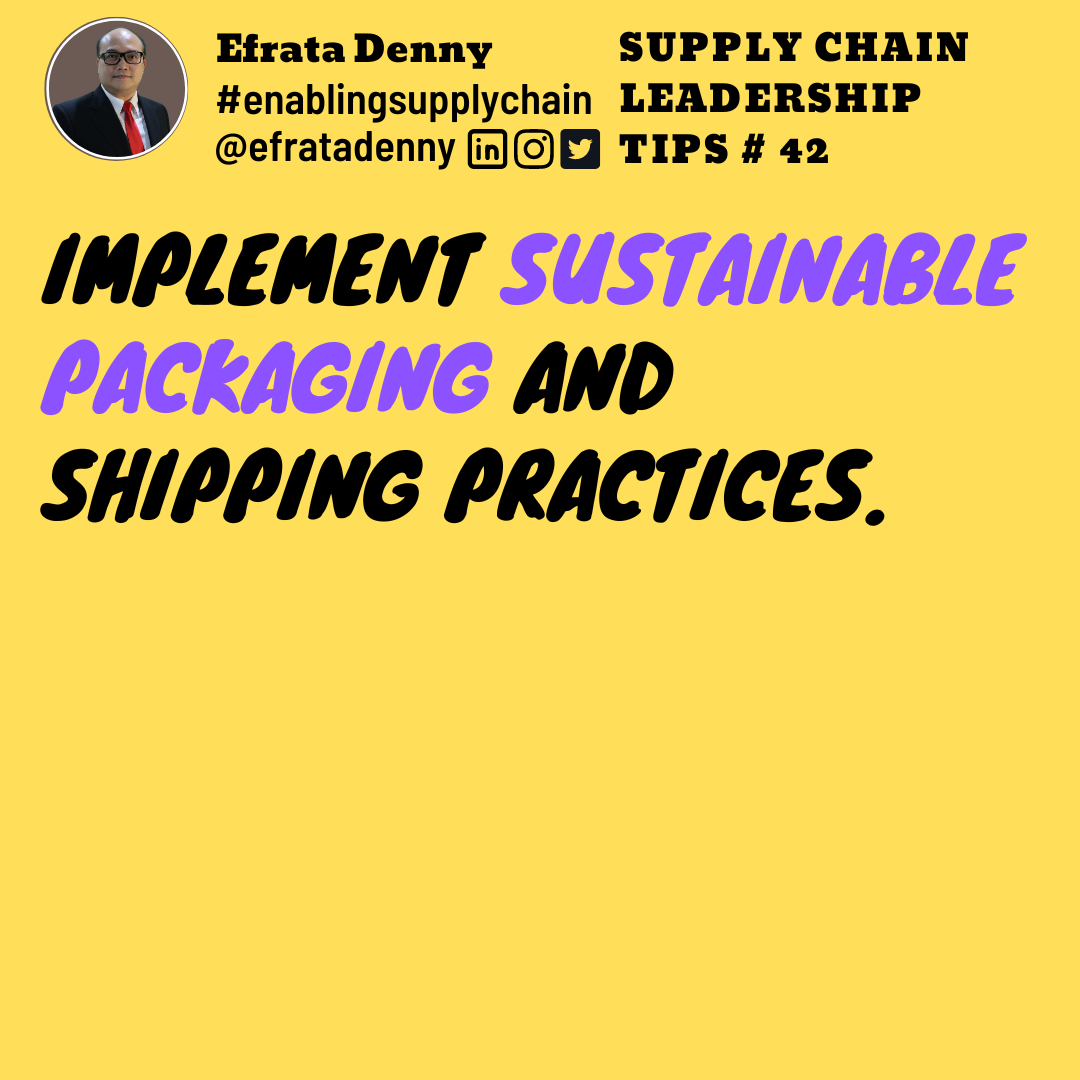
“Implement sustainable packaging and shipping practices.” – Efrata Denny

In a world that’s increasingly conscious of environmental issues, supply chain leaders must take proactive steps to ensure their operations are sustainable and eco-friendly. This includes adopting sustainable packaging and shipping practices. By implementing these changes, you can reduce your environmental impact, save costs, and meet the growing demand for eco-conscious solutions.

1. Optimize Packaging Design

The first step to greener shipping practices is to review your packaging materials and design. Many companies use more packaging material than necessary, leading to waste and increased shipping costs. By right-sizing your packages, you can reduce material waste and save on transportation costs.

2. Use Recycled and Biodegradable Materials

Consider adopting packaging materials made from recycled content or biodegradable materials. These alternatives are kinder to the environment and contribute to the concept of a circular economy.

3. Right-Size Shipments

Oversized boxes and excessive packaging fillers not only increase your shipping costs but also harm the environment. Right-sizing your shipments helps to minimize wasted space and materials, thus improving efficiency and reducing carbon emissions.

4. Implement Reusable Packaging

For some products and industries, reusable packaging options can significantly reduce waste. Collaborate with suppliers and customers to create closed-loop systems for packaging return and reuse.

5. Explore Alternative Solutions

Consider innovative packaging solutions, such as compostable materials, molded pulp, or plant-based plastics. These alternatives can help you reduce your reliance on traditional plastics, which are known for their environmental impact.

6. Opt for Sustainable Labels and Inks

Sustainability isn’t just about packaging materials. You can also make a positive impact by choosing sustainable label materials and inks. Look for options made from recycled materials or those using water-based, soy-based, or eco-friendly printing methods.

7. Collaborate with Sustainable Suppliers

Selecting suppliers who prioritize sustainability is a significant step in the right direction. When your partners offer environmentally friendly packaging options and demonstrate a commitment to sustainable practices, your supply chain becomes more eco-conscious.

8. Optimize Transportation Routes

Transportation has a massive impact on the environment. Streamline your routes to minimize distances traveled and fuel consumption. Consolidate shipments whenever possible and explore opportunities for a modal shift to more sustainable transport modes, like rail or sea.

9. Promote Recycling and Responsible Disposal

Educate your customers about the proper recycling and disposal methods for your packaging materials. Provide clear instructions on how to recycle or reuse packaging components. This proactive approach helps ensure that the lifecycle of your packaging ends as eco-friendly as possible.

10. Measure and Track Environmental Impact

Implement metrics and tracking systems to measure your supply chain’s environmental impact. Regular monitoring and reporting can help drive continuous improvement. It also allows you to share your sustainability achievements with your network and customers.

Sustainable packaging and shipping practices are not just a trend; they are a necessity in today’s eco-conscious world. By optimizing your packaging, adopting eco-friendly materials, and collaborating with sustainable suppliers, you can make a real difference in reducing waste and conserving resources. Your eco-friendly approach will not only save costs but also strengthen your brand’s reputation as a responsible and eco-conscious company. Share these tips with your supply chain network and join the sustainability movement in our industry. Together, we can build a greener future for all.

Share this:

  • Click to share on Facebook (Opens in new window) Facebook
  • Click to share on X (Opens in new window) X
  • Click to share on LinkedIn (Opens in new window) LinkedIn
  • Click to email a link to a friend (Opens in new window) Email
  • Click to share on Tumblr (Opens in new window) Tumblr
  • Click to share on Pinterest (Opens in new window) Pinterest
Like Loading...

From Hiring to Retention: Mastering Supply Chain Talent Management

Posted by efratadenny on 4 January 2024
Posted in: Leadership, Supply Chain. Tagged: enablingsupplychain, Leadership, Supply Chain, Supply Chain Leadership, Supply Chain Management. Leave a comment

“Invest in supply chain talent acquisition and retention.” – Efrata Denny

In today’s fast-paced business landscape, having a skilled and dedicated supply chain team is essential for success. An efficient supply chain is the lifeline of any organization, and the people behind it are its heartbeat. Whether you’re a seasoned supply chain manager or a newcomer to the field, these strategies will help you assemble and retain a talented team of professionals who can navigate the complex supply chain landscape.

The supply chain is the backbone of many businesses, ensuring that products and services are delivered efficiently and on time. To maintain a robust and responsive supply chain, it’s essential to invest in supply chain talent acquisition and retention. In this article, we’ll explore strategies to attract and keep the best talent in your supply chain team, ensuring ongoing success and innovation.

1. Define the Skill Set

Before you begin your talent acquisition efforts, clearly define the skill set and competencies required for each role within your supply chain team. Identifying the essential qualities, such as analytical skills, problem-solving abilities, adaptability, and teamwork, will help you target the right candidates.

2. Attract Top Talent

To attract top talent, develop an attractive employer brand and value proposition that showcases the opportunities, growth potential, and positive work environment your organization offers. Utilize social media, industry events, and professional networks to reach potential candidates actively.

3. Collaborate with Educational Institutions

Building relationships with educational institutions and industry associations can be a fruitful strategy for tapping into emerging talent. Offer internships, apprenticeships, or co-op programs to nurture and identify promising individuals early in their careers.

4. Foster a Positive Work Culture

Cultivate a positive work culture that promotes collaboration, innovation, and personal growth. Encourage work-life balance, provide opportunities for professional development, and recognize and reward outstanding performance.

5. Competitive Compensation Packages

Supply chain professionals play a crucial role in your organization’s success, so it’s vital to offer competitive compensation packages. Regularly review and adjust compensation to remain competitive and acknowledge the value these professionals bring to your organization.

6. Provide Ongoing Training and Development

Invest in training programs, workshops, and certifications to enhance the skills and knowledge of your supply chain team. This not only strengthens their capabilities but also demonstrates your commitment to their growth.

7. Create a Career Progression Path

Develop a clear career progression path within the supply chain function. Provide opportunities for advancement, cross-functional exposure, and the development of leadership skills.

8. Mentorship and Coaching

Implement mentorship and coaching programs to provide guidance and support to your supply chain professionals. Experienced leaders can share their expertise and help nurture future leaders.

9. Regular Performance Feedback

Establish a culture of regular performance feedback and constructive conversations. Provide timely and specific feedback to help individuals grow and improve in their roles.

10. Retain Top Talent

Implement retention strategies, such as offering challenging assignments, recognition programs, work-life balance initiatives, and competitive benefits. Regularly communicate the impact of their work on the organization’s success, reinforcing their value.

By investing in supply chain talent acquisition and retention, you’ll build a high-performing team that drives innovation, efficiency, and success. Share these tips with your supply chain network and attract and retain the best talent for your organization. Remember, your supply chain is only as strong as the team that manages it, so make sure it’s a team of dedicated and skilled professionals.

Investing in the people who power your supply chain is a surefire way to guarantee its effectiveness and resilience. With these strategies, you’ll be on the path to building a supply chain dream team that can adapt, innovate, and drive success even in the face of challenges.

Share this:

  • Click to share on Facebook (Opens in new window) Facebook
  • Click to share on X (Opens in new window) X
  • Click to share on LinkedIn (Opens in new window) LinkedIn
  • Click to email a link to a friend (Opens in new window) Email
  • Click to share on Tumblr (Opens in new window) Tumblr
  • Click to share on Pinterest (Opens in new window) Pinterest
Like Loading...

Posts navigation

← Older Entries
Newer Entries →
  • Yes You Can Search

  • Yes This is Calendar

    December 2025
    M T W T F S S
    1234567
    891011121314
    15161718192021
    22232425262728
    293031  
    « Sep    
  • Yes These are Archives

  • Yes Recent Posts

    • The Future of Supply Chain: How AI and Automation Are Revolutionizing the Industry
    • Top 10 Supply Chain Innovations to Watch in 2024
    • The Rise of Sustainable Supply Chains: Why Going Green is Now a Business Imperative
    • The Great Debate: Centralized vs. Decentralized Supply Chains—Which is Better for 2024?
    • The Paradox of Supply Chain and Logistics
    • Agility Unleashed: The Power of Continuous Evaluation in Procurement Strategy
    • Cost Clarity: Mastering Total Cost of Acquisition for Procurement Excellence
    • Strategic Sourcing Mastery: Unleashing Procurement Excellence through Consolidated Purchasing
    • Unleashing Operational Excellence Through Just-in-Time (JIT) Inventory Management
    • Revolutionizing Procurement: The Strategic Impact of Harnessing Reverse Auctions for Maximum Cost Savings
  • Yes Follow Me

    Post a Day 2012 Twitter EfrataDenny
  • Yes This is My Twitter

    Tweets by efratadenny
  • Yes Advertising

    Roppopo.com
  • Yes This is Category

    Australia Bali Bandung China Collection Food France Indonesia Intermezzo Jakarta Kraft Foods Leadership Lighting Experiences Liquidart Manado Management Model Online Store Photography Portfolio Press Procurement Still Life Supply Chain Sustainability Traveling Underwater Wines Yes This is Me
  • Enter your email address to follow this blog and receive notifications of new posts by email.

    Join 986 other subscribers
  • Flickr Photos

    Last Supper Wood EngravingChristmas SockChristmas Bell
    More Photos
  • Recent Comments

    Bogdan Kolos's avatarBogdan Kolos on The Power of Strong Supplier R…
    Reighne Sq's avatarReighne Sq on Weekly Photo Challenge: One Sh…
    Shubham's avatarShubham on Long Tail and Short Tail Red…
    Terrence M's avatarTerrence M on Fettuccine Carbonara
    Ivan's avatarIvan on Maria Clara Sangria Red W…
    wahyu jatmiko krisdiyanto's avatarwahyu jatmiko krisdi… on Mie Bakso
    Weekly Photo Challen… on Weekly Photo Challenge: F…
    bali ratih's avatarbali ratih on Diving at Benoa
    Berita Hari Ini's avatarBerita Hari Ini on Miss Indonesia will increase W…
    geraldine's avatargeraldine on Maria Clara Sangria Red W…
    Chika Lesmana's avatarChika Lesmana on Shanghai Ice
    Chika Lesmana's avatarChika Lesmana on Shanghai Ice
    ipah kholipah's avataripah kholipah on Shanghai Ice
    Evi's avatarEvi on Platinum Hill Limited Edition…
    renxkyoko's avatarrenxkyoko on Sirloin Steak
  • Yes Page Info

    Yahoo bot last visit Msn bot last visit Google PageRank Checker

    The best of travel stories in and around Singapore TravelerVoice Bloggers - Meet Millions of Bloggers Personal Blogs visitor counters
  • Yes Facebook

    Yes Facebook
Blog at WordPress.com.
Efrata Denny
Create a free website or blog at WordPress.com.
Privacy & Cookies: This site uses cookies. By continuing to use this website, you agree to their use.
To find out more, including how to control cookies, see here: Cookie Policy
  • Subscribe Subscribed
    • Efrata Denny
    • Join 966 other subscribers
    • Already have a WordPress.com account? Log in now.
    • Efrata Denny
    • Subscribe Subscribed
    • Sign up
    • Log in
    • Report this content
    • View site in Reader
    • Manage subscriptions
    • Collapse this bar
 

Loading Comments...
 

    %d