Efrata Denny

Personal Blog contains Wines, Foods, Traveling, and Photography

  • Home
  • All About Me
    • Yes This is Me
    • Private Message
    • Guest Book
    • Collection
      • Cigars
      • IntermezZo
      • Liquors
      • Sketch
      • Zombie Story
    • Friends
    • Portfolio
      • Kraft Foods
      • Arnott’s
      • Glaxo Smith Kline
      • Online Store
    • Press
  • Wines
    • Argentina
    • Australia
    • Austria
    • Chile
    • France
    • Indonesia
    • Israel
    • Italia
    • Portugal
    • South Africa
    • Spain
    • USA
    • Vietnam
  • Food
  • Traveling
    • Australia
    • China
    • Hong Kong
    • Indonesia
    • Macau
    • Malaysia
    • Philippines
    • Singapore
    • Thailand
    • Vietnam
  • Photography
    • Model
    • Still Life
    • Liquidart
    • Underwater
  • Awards
  • Supply Chain
    • Sustainability
    • Workshop

The Power of Regular Market Research in Supply Chain Procurement

Posted by efratadenny on 18 January 2024
Posted in: Procurement, Supply Chain. Tagged: enablingsupplychain, Procurement, Purchasing, Sourcing, Supply Chain, Supply Chain Management. Leave a comment

“Conduct regular market research to identify new suppliers and trends.” – Efrata Denny

In the fast-paced world of supply chain management, staying ahead of the game requires more than just agility—it demands strategic foresight. One key to optimizing your supply chain procurement is the continuous practice of market research. In this article, we’ll delve into why market research is crucial and provide actionable insights on how to harness its power for procurement excellence.

  1. Uncover New Possibilities: Market research acts as a compass, guiding you towards new possibilities. By delving into the market landscape, you can discover potential suppliers, expanding your network and fostering healthy competition. Embrace the opportunities that market research unveils to diversify and strengthen your supplier base.
  2. Stay Current with Trends: The business landscape is dynamic, with trends evolving at a rapid pace. Regular market research allows you to stay current with emerging trends, technologies, and best practices. This insight not only enhances your procurement strategy but also provides a competitive edge by aligning your approach with industry advancements.
  3. Supplier Evaluation: A crucial aspect of market research is supplier evaluation. Assess the reputation, capabilities, and suitability of potential suppliers based on market research findings. This thorough assessment ensures that you engage with suppliers who align with your organization’s values and can contribute positively to your supply chain.
  4. Identify Cost-Saving Opportunities: Cost optimization is a perpetual goal in procurement. Market research can reveal cost-effective alternatives without compromising quality. By identifying opportunities for cost savings, you can optimize your procurement spend and enhance the overall efficiency of your supply chain.
  5. Enhance Supplier Relationships: Knowledge is a powerful tool in building relationships. A deep understanding of market trends and supplier landscapes strengthens your ability to engage in meaningful conversations with current and potential suppliers. Informed interactions foster stronger relationships, laying the groundwork for successful and collaborative partnerships.
  6. Keep Pace with Innovation: Innovation is the heartbeat of progress. Market research allows you to tap into the latest advancements, ensuring your procurement approach aligns with industry developments. By embracing innovation, you position your organization as a forward-thinking player in the market.
  7. Adapt to Changing Demands: Customer preferences and market demands are ever-evolving. By keeping your finger on the pulse of the market, you can anticipate shifts in customer preferences and proactively adjust your supplier base. This adaptability is a key component of maintaining a responsive and customer-centric supply chain.
  8. Leverage Data-Driven Insights: In the era of data, leverage the insights gained from market research to make informed decisions. Utilize data-driven approaches to align your procurement strategy with current market dynamics, ensuring that your decisions are grounded in accurate and up-to-date information.

Conducting regular market research isn’t just a task; it’s a strategic imperative for procurement excellence. By uncovering new possibilities, staying current with trends, and leveraging data-driven insights, you empower your organization to navigate the complexities of the supply chain with confidence. Stay ahead of the game, embrace industry advancements, and unlock untapped opportunities for procurement success through the power of regular market research.

Share this:

  • Click to share on Facebook (Opens in new window) Facebook
  • Click to share on X (Opens in new window) X
  • Click to share on LinkedIn (Opens in new window) LinkedIn
  • Click to email a link to a friend (Opens in new window) Email
  • Click to share on Tumblr (Opens in new window) Tumblr
  • Click to share on Pinterest (Opens in new window) Pinterest
Like Loading...

The Strategic Imperative of Supplier Diversification in Supply Chain Procurement

Posted by efratadenny on 17 January 2024
Posted in: Procurement, Supply Chain. Tagged: enablingsupplychain, Procurement, Purchasing, Sourcing, Supply Chain, Supply Chain Management. Leave a comment

“Diversify your supplier base to reduce risk.” – Efrata Denny

In the dynamic world of supply chain management, resilience is not just a buzzword—it’s a strategic imperative. One of the key measures to fortify your supply chain against potential risks is the deliberate diversification of your supplier base. In this blog post, we’ll delve into why supplier diversification matters and provide actionable insights on how to navigate this crucial aspect of procurement.

  1. Mitigate Dependency Risks: Relying solely on a single supplier can be a risky proposition. Any disruption, whether it be due to natural disasters, geopolitical events, or unforeseen circumstances, can lead to supply chain vulnerabilities. Diversification ensures alternative options, mitigating dependency risks and enhancing overall supply chain resilience.
  2. Market Fluctuations: The business landscape is dynamic, with factors like pricing changes, availability issues, and geopolitical shifts impacting suppliers. A diversified supplier base acts as a shield against these fluctuations, providing your organization with the flexibility to navigate through uncertainties without compromising operations.
  3. Explore New Opportunities: Diversifying your supplier network isn’t just a risk mitigation strategy; it’s a pathway to innovation and growth. Expanding your supplier base opens doors to new products, services, and technologies. Embracing diversity in your supply chain can drive competitiveness and position your organization at the forefront of industry trends.
  4. Due Diligence: A critical step in supplier diversification is conducting thorough due diligence. Identify reliable suppliers with a proven track record, ensuring they align with your organization’s quality and ethical standards. A comprehensive vetting process is the foundation for a diversified supplier base that you can trust.
  5. Assess Capacity and Capability: Supplier diversification is not just about quantity; it’s about quality. Evaluate the capacity of potential suppliers to meet your demand and ensure they possess the necessary skills and resources to consistently deliver high-quality products or services. A well-rounded assessment guarantees that each supplier contributes to your supply chain’s strength.
  6. Distribution of Risk: Strategically allocate your procurement volume among multiple suppliers. Balancing the distribution of risk ensures that the impact of any single supplier’s failure is minimized. It also maximizes your bargaining power, allowing for better negotiation and collaboration with a range of partners.
  7. Supplier Relationship Management: Cultivate strong relationships with your diverse suppliers. Fostering collaboration, trust, and long-term partnerships are essential for a successful diversified supplier base. Effective supplier relationship management ensures a seamless and harmonious collaboration that benefits both parties.
  8. Continuous Monitoring: The dynamic nature of the business environment necessitates continuous monitoring. Regularly evaluate and reassess the performance and reliability of your diversified supplier base. This ongoing assessment ensures that your supply chain remains adaptable, responsive, and resilient in the face of evolving challenges.

Supplier diversification isn’t just a risk management strategy; it’s a blueprint for long-term success. By mitigating dependency risks, navigating market fluctuations, and exploring new opportunities, you fortify your supply chain against potential disruptions. Invest in due diligence, assess capacity and capability, and strategically distribute risk to ensure a resilient and agile supply chain. Diversify your supplier base, unlock new possibilities, and fortify the foundation of your supply chain resilience.

Share this:

  • Click to share on Facebook (Opens in new window) Facebook
  • Click to share on X (Opens in new window) X
  • Click to share on LinkedIn (Opens in new window) LinkedIn
  • Click to email a link to a friend (Opens in new window) Email
  • Click to share on Tumblr (Opens in new window) Tumblr
  • Click to share on Pinterest (Opens in new window) Pinterest
Like Loading...

The Art of Continuous Supplier Performance Evaluation in Supply Chain Procurement

Posted by efratadenny on 16 January 2024
Posted in: Procurement, Supply Chain. Tagged: enablingsupplychain, Procurement, Purchasing, Sourcing, Supply Chain, Supply Chain Management. Leave a comment

“Continuously evaluate and monitor supplier performance.” – Efrata Denny

In the ever-evolving landscape of supply chain procurement, the key to optimizing efficiency and maintaining a competitive edge lies in the continuous evaluation and monitoring of supplier performance. In this article, we’ll explore the essential steps to keep your supply chain in check and ensure that your procurement goals are not only met but exceeded.

  1. Set Performance Metrics: The journey begins with clearly defined key performance indicators (KPIs). Establish metrics that align with both your procurement goals and the expectations you have from your suppliers. These metrics serve as the compass guiding you towards success.
  2. Regular Assessments: Don’t let performance evaluations be a sporadic occurrence. Conduct periodic assessments to objectively measure supplier performance. These evaluations not only provide valuable insights but also pave the way for continuous improvement by identifying areas that may need attention or enhancement.
  3. Communication is Key: Maintaining open lines of communication is paramount. Regularly engage with your suppliers, providing constructive feedback and addressing concerns promptly. Effective communication fosters a collaborative environment where both parties can work together towards shared success.
  4. Quality is Paramount: Never compromise on quality. Monitor the consistency of goods or services delivered by your suppliers to ensure they consistently meet your standards. A commitment to quality not only enhances your product or service but also reinforces your brand reputation.
  5. Collaborative Improvement: Transform evaluations into opportunities for enhancement. Work together with your suppliers to identify areas for improvement and collaboratively implement action plans. This collaborative approach not only strengthens the relationship but also contributes to the overall improvement of the supply chain.
  6. Risk Management: Vigilance is key in a dynamic market. Regularly evaluate suppliers’ risk profiles to proactively mitigate potential disruptions to your supply chain. Being prepared for potential challenges ensures that your supply chain remains resilient and adaptable.
  7. Embrace Technology: Leverage the power of digital tools and platforms to automate performance tracking. Technology not only streamlines the evaluation process but also enhances visibility into supplier metrics. This increased visibility enables proactive decision-making and risk mitigation.
  8. Supplier Scorecards: Develop comprehensive scorecards to measure and compare supplier performance objectively. These scorecards serve as valuable tools for informed decision-making, allowing you to identify top-performing suppliers and areas that may require attention.
  9. Continuous Improvement: Encourage a culture of continuous improvement. Motivate suppliers to adopt initiatives that drive ongoing enhancement. By sharing best practices and fostering a commitment to improvement, you and your suppliers contribute to each other’s mutual growth and success.

In the realm of supply chain excellence, the journey doesn’t end with procurement—it thrives on continuous evaluation and improvement. By setting performance metrics, conducting regular assessments, and embracing technology, you can navigate towards a resilient supply chain that not only meets but exceeds expectations. Keep your supply chain in check, drive quality, and maintain a competitive edge by prioritizing the continuous evaluation and monitoring of supplier performance.

Share this:

  • Click to share on Facebook (Opens in new window) Facebook
  • Click to share on X (Opens in new window) X
  • Click to share on LinkedIn (Opens in new window) LinkedIn
  • Click to email a link to a friend (Opens in new window) Email
  • Click to share on Tumblr (Opens in new window) Tumblr
  • Click to share on Pinterest (Opens in new window) Pinterest
Like Loading...

The Power of Strong Supplier Relationships in Supply Chain Procurement

Posted by efratadenny on 15 January 2024
Posted in: Procurement, Supply Chain. Tagged: enablingsupplychain, Procurement, Purchasing, Sourcing, Supply Chain, Supply Chain Management. 1 Comment

“Maintain strong relationships with key suppliers.” – Efrata Denny

In the intricate dance of supply chain management, one rhythm stands out as particularly crucial: the beat of collaboration between organizations and their key suppliers. Maintaining robust relationships with suppliers is not just a tip; it’s a strategic imperative. In this blog post, we’ll explore why supplier relationships matter and provide actionable insights on how to cultivate and strengthen them.

  1. Collaboration is Key: At the heart of a strong supplier relationship is collaboration. Foster open lines of communication and a collaborative spirit that goes beyond transactional interactions. When suppliers are treated as partners, the synergy between organizations becomes a driving force for success.
  2. Trust and Transparency: Building trust is a cornerstone of any meaningful relationship, and supplier relationships are no exception. Be transparent about your expectations, requirements, and long-term goals. This transparency not only fosters trust but also sets the stage for a deeper understanding of each other’s needs.
  3. Regular Communication: The conversation shouldn’t end after a contract is signed. Engage in regular updates, meetings, and feedback sessions. This ongoing communication ensures alignment, allows for timely adjustments, and enables the quick resolution of any challenges that may arise.
  4. Shared Objectives: Establish shared objectives with your suppliers. Align their efforts with your organization’s goals, creating a symbiotic relationship where both parties benefit. A well-aligned partnership sets the stage for a win-win situation, where mutual success becomes the shared objective.
  5. Recognize Their Value: Every contribution matters. Acknowledge the valuable contributions of your suppliers and celebrate their successes. A little appreciation goes a long way in fostering a positive and collaborative atmosphere that extends beyond the contractual obligations.
  6. Collaborative Problem-Solving: Challenges are inevitable, but how you approach them defines the strength of your relationship. Treat challenges as opportunities for collaborative problem-solving. When you view suppliers as partners in overcoming obstacles, you tap into a wealth of collective expertise.
  7. Long-Term Commitment: Think beyond the immediate transaction. Cultivate long-term relationships with your key suppliers, investing in their growth and success. As they become integral to your supply chain, the stability and continuity they provide contribute significantly to your overall resilience.
  8. Performance Evaluation: Regularly assess supplier performance based on agreed-upon metrics. Provide constructive feedback when improvements are needed and recognition when they excel. This iterative process not only ensures accountability but also reinforces the commitment to continuous improvement.

In the intricate tapestry of supply chain management, strong supplier relationships form the resilient threads that hold everything together. By embracing collaboration, trust, and ongoing communication, organizations can not only weather challenges but also unlock innovation and competitive advantages. Strengthen your supply chain by investing in the power of meaningful supplier relationships.

Share this:

  • Click to share on Facebook (Opens in new window) Facebook
  • Click to share on X (Opens in new window) X
  • Click to share on LinkedIn (Opens in new window) LinkedIn
  • Click to email a link to a friend (Opens in new window) Email
  • Click to share on Tumblr (Opens in new window) Tumblr
  • Click to share on Pinterest (Opens in new window) Pinterest
Like Loading...

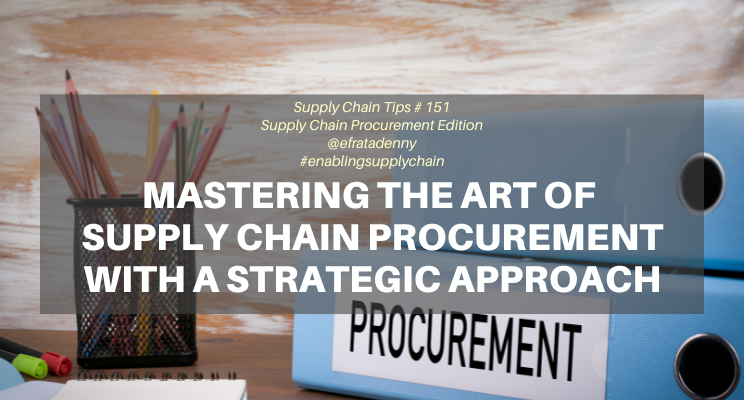
Mastering the Art of Supply Chain Procurement with a Strategic Approach

Posted by efratadenny on 14 January 2024
Posted in: Procurement, Supply Chain. Tagged: enablingsupplychain, Procurement, Purchasing, Sourcing, Supply Chain, Supply Chain Management. Leave a comment

“Develop a clear procurement strategy aligned with organizational goals.” – Efrata Denny

Welcome to a world where strategic thinking is the key to unlocking unparalleled success in supply chain procurement! In the fast-paced landscape of business, organizations need to navigate through the complexities of procurement with a well-defined strategy. In this blog post, we’ll explore the indispensable tips to craft a clear and effective procurement strategy that aligns with your organizational goals.

  1. Understand Your Objectives: The journey towards procurement excellence begins with a clear understanding of your organization’s short and long-term goals. What are you aiming to achieve? Whether it’s cost reduction, quality improvement, or supply chain resilience, align your procurement strategy with these objectives to drive meaningful outcomes.
  2. Assess the Current State: Before charting the course ahead, take a comprehensive look at your existing procurement processes. Identify the strengths and weaknesses, gaps, and areas that need improvement. This introspective analysis sets the foundation for building a strategy that addresses specific needs and challenges within your organization.
  3. Align with Stakeholders: Collaboration is the cornerstone of a successful procurement strategy. Engage with key stakeholders to ensure that your approach aligns with their needs and expectations. By fostering open communication and collaboration, you create a procurement strategy that is inclusive and reflective of the broader organizational vision.
  4. Define Priorities: Not all aspects of procurement are created equal. Identify the critical areas where procurement can have the most significant impact on achieving your organizational goals. This focus ensures that resources are allocated efficiently and efforts are concentrated where they matter the most.
  5. Conduct Market Research: In the dynamic world of supply chain management, staying ahead requires continuous learning. Regularly conduct market research to stay informed about industry trends, innovations, and potential suppliers. This knowledge empowers you to optimize your procurement approach, leveraging the latest advancements in the field.
  6. Leverage Technology: In the digital age, technology is a powerful ally in procurement. Embrace digital tools to streamline and automate your processes, enhancing efficiency and accuracy. From e-procurement systems to data analytics, technology can revolutionize the way you manage your supply chain, making it more responsive and adaptable.
  7. Emphasize Supplier Relationships: Procurement success goes beyond transactions; it’s about building lasting partnerships. Nurture strong relationships with suppliers, fostering trust, collaboration, and mutual success. A robust network of reliable suppliers is a valuable asset that contributes to your organization’s long-term stability and growth.
  8. Measure and Adapt: Establish key performance indicators (KPIs) to track the progress of your procurement strategy. Regularly reassess your approach, considering feedback, changing market conditions, and evolving organizational goals. The ability to adapt and refine your strategy ensures its continued effectiveness in the dynamic landscape of supply chain management.

In conclusion, the path to procurement excellence is illuminated by a well-crafted strategy. By understanding your objectives, collaborating with stakeholders, and leveraging technology, you can enhance your organization’s agility, cost-effectiveness, and overall performance. Embrace these procurement tips, and watch as your organization rises to new heights in the realm of supply chain management.

Share this:

  • Click to share on Facebook (Opens in new window) Facebook
  • Click to share on X (Opens in new window) X
  • Click to share on LinkedIn (Opens in new window) LinkedIn
  • Click to email a link to a friend (Opens in new window) Email
  • Click to share on Tumblr (Opens in new window) Tumblr
  • Click to share on Pinterest (Opens in new window) Pinterest
Like Loading...

Posts navigation

← Older Entries
Newer Entries →
  • Yes You Can Search

  • Yes This is Calendar

    December 2025
    M T W T F S S
    1234567
    891011121314
    15161718192021
    22232425262728
    293031  
    « Sep    
  • Yes These are Archives

  • Yes Recent Posts

    • The Future of Supply Chain: How AI and Automation Are Revolutionizing the Industry
    • Top 10 Supply Chain Innovations to Watch in 2024
    • The Rise of Sustainable Supply Chains: Why Going Green is Now a Business Imperative
    • The Great Debate: Centralized vs. Decentralized Supply Chains—Which is Better for 2024?
    • The Paradox of Supply Chain and Logistics
    • Agility Unleashed: The Power of Continuous Evaluation in Procurement Strategy
    • Cost Clarity: Mastering Total Cost of Acquisition for Procurement Excellence
    • Strategic Sourcing Mastery: Unleashing Procurement Excellence through Consolidated Purchasing
    • Unleashing Operational Excellence Through Just-in-Time (JIT) Inventory Management
    • Revolutionizing Procurement: The Strategic Impact of Harnessing Reverse Auctions for Maximum Cost Savings
  • Yes Follow Me

    Post a Day 2012 Twitter EfrataDenny
  • Yes This is My Twitter

    Tweets by efratadenny
  • Yes Advertising

    Roppopo.com
  • Yes This is Category

    Australia Bali Bandung China Collection Food France Indonesia Intermezzo Jakarta Kraft Foods Leadership Lighting Experiences Liquidart Manado Management Model Online Store Photography Portfolio Press Procurement Still Life Supply Chain Sustainability Traveling Underwater Wines Yes This is Me
  • Enter your email address to follow this blog and receive notifications of new posts by email.

    Join 986 other subscribers
  • Flickr Photos

    Last Supper Wood EngravingChristmas SockChristmas Bell
    More Photos
  • Recent Comments

    Bogdan Kolos's avatarBogdan Kolos on The Power of Strong Supplier R…
    Reighne Sq's avatarReighne Sq on Weekly Photo Challenge: One Sh…
    Shubham's avatarShubham on Long Tail and Short Tail Red…
    Terrence M's avatarTerrence M on Fettuccine Carbonara
    Ivan's avatarIvan on Maria Clara Sangria Red W…
    wahyu jatmiko krisdiyanto's avatarwahyu jatmiko krisdi… on Mie Bakso
    Weekly Photo Challen… on Weekly Photo Challenge: F…
    bali ratih's avatarbali ratih on Diving at Benoa
    Berita Hari Ini's avatarBerita Hari Ini on Miss Indonesia will increase W…
    geraldine's avatargeraldine on Maria Clara Sangria Red W…
    Chika Lesmana's avatarChika Lesmana on Shanghai Ice
    Chika Lesmana's avatarChika Lesmana on Shanghai Ice
    ipah kholipah's avataripah kholipah on Shanghai Ice
    Evi's avatarEvi on Platinum Hill Limited Edition…
    renxkyoko's avatarrenxkyoko on Sirloin Steak
  • Yes Page Info

    Yahoo bot last visit Msn bot last visit Google PageRank Checker

    The best of travel stories in and around Singapore TravelerVoice Bloggers - Meet Millions of Bloggers Personal Blogs visitor counters
  • Yes Facebook

    Yes Facebook
Blog at WordPress.com.
Efrata Denny
Blog at WordPress.com.
Privacy & Cookies: This site uses cookies. By continuing to use this website, you agree to their use.
To find out more, including how to control cookies, see here: Cookie Policy
  • Subscribe Subscribed
    • Efrata Denny
    • Join 966 other subscribers
    • Already have a WordPress.com account? Log in now.
    • Efrata Denny
    • Subscribe Subscribed
    • Sign up
    • Log in
    • Report this content
    • View site in Reader
    • Manage subscriptions
    • Collapse this bar
 

Loading Comments...
 

    %d