
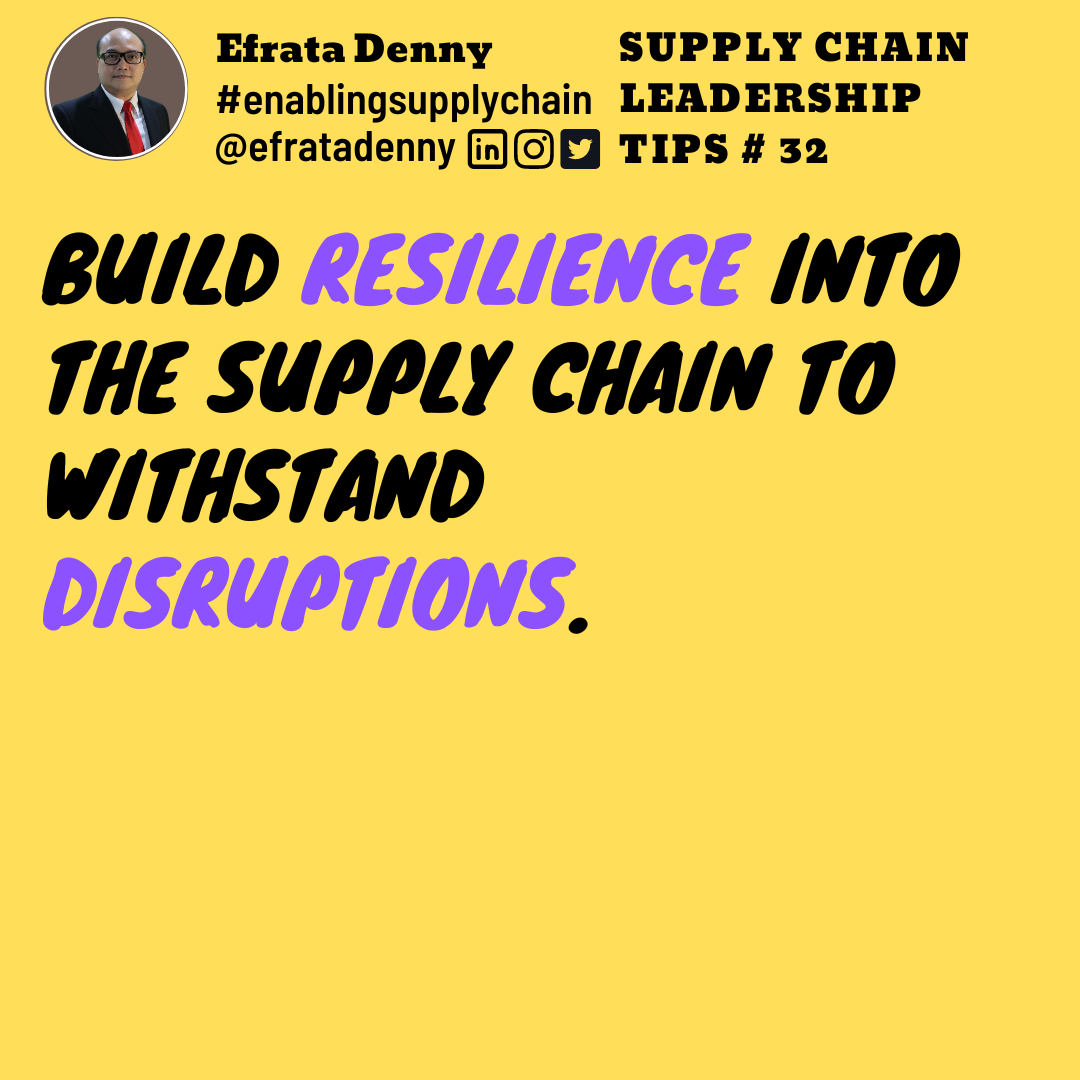
“Build resilience into the supply chain to withstand disruptions.” – Efrata Denny
The modern business landscape is fraught with uncertainty, making supply chain resilience a top priority for organizations. Disruptions can come in various forms, from natural disasters and geopolitical events to supplier issues and cybersecurity threats. In this article, we explore ten crucial strategies to help you build a resilient supply chain that can withstand these disruptions, ensuring uninterrupted operations and customer satisfaction. Let’s dive in!
1. Identify Potential Risks and Vulnerabilities
Resilience starts with awareness. Conduct a comprehensive risk assessment to pinpoint internal and external risks that could impact your supply chain. These may include natural disasters, political instability, supplier vulnerabilities, and more. By understanding the potential challenges, you can proactively prepare for them.
2. Diversify Your Supplier Base
Over-reliance on a single supplier can be a significant vulnerability. Diversify your supplier network to spread risk and establish alternative sources of supply. This approach ensures that you have backup options in case a disruption occurs with one of your suppliers.
3. Maintain Clear and Open Communication
Effective communication is the backbone of supply chain resilience. Establish transparent communication channels with suppliers, customers, and key stakeholders. This enables the timely exchange of information and collaboration during uncertain times, fostering trust and efficient problem-solving.
4. Establish Backup Plans and Alternative Routes
When disruptions strike, having a plan in place can make all the difference. Develop contingency plans that include alternative logistics routes, backup suppliers, and safety stock to minimize the impact of disruptions. Being prepared will help you react swiftly and effectively.
5. Implement Robust Inventory Management Practices
Balancing optimal inventory levels with working capital management is an art. Strive to ensure the availability of critical components or products during disruptions while keeping inventory costs in check. Effective inventory management is key to minimizing downtime.
6. Leverage Technology for Real-Time Visibility
In today’s digital age, real-time visibility is a game-changer. Implement supply chain visibility tools and technologies that provide insights into inventory levels, production status, and demand patterns. With real-time data, you can make informed decisions and quickly adapt to changing circumstances.
7. Foster Collaboration and Information Sharing
Collaboration is a powerful tool in building supply chain resilience. Work closely with key suppliers, customers, and industry partners to share best practices, insights, and innovative solutions for managing disruptions collectively. Collaborative efforts often yield innovative solutions.
8. Build Agility into Your Operations
Flexibility is the cornerstone of resilience. Develop agile production and distribution capabilities that can quickly adapt to changing circumstances. Whether it’s adjusting production volumes or rerouting shipments, agility ensures you can respond promptly to disruptions.
9. Invest in Robust Data Security and Cybersecurity Measures
In a world where digital threats are ever-present, protecting your digital infrastructure is paramount. Invest in robust data security and cybersecurity measures to safeguard your supply chain from potential cyber threats. Ensuring data security adds an extra layer of resilience.
10. Continuously Learn and Improve
Resilience is an ongoing journey. Regularly evaluate and learn from disruptions to enhance your supply chain’s resilience. Implement lessons learned, update risk mitigation strategies, and embrace innovation to stay ahead of potential challenges.
Building a resilient supply chain is no longer a choice but a necessity in today’s unpredictable world. By following these ten strategies, you can fortify your supply chain against disruptions, ensuring business continuity and customer satisfaction. Together, we can overcome challenges and thrive in a world filled with uncertainties.









 Efrata Denny