
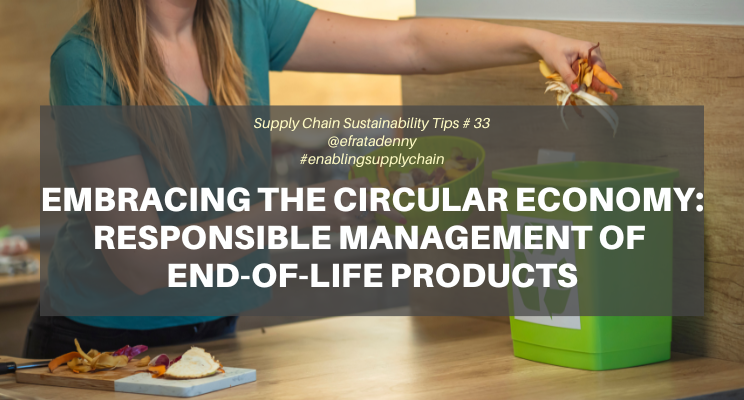
As we strive to build a more sustainable future, it is essential to consider the end-of-life management of products. By adopting practices that promote repair, reuse, and recycling, we can reduce waste, conserve resources, and contribute to a circular economy. In this article, we will explore tips to make a positive impact by managing end-of-life products responsibly.
- Design for durability: One of the fundamental principles of the circular economy is designing products that are built to last. By using high-quality materials and durable construction techniques, we can extend the lifespan of products, reducing the need for frequent replacements and minimizing waste.
- Enable repairability: Design products with modular components and easily replaceable parts. This approach makes it easier for consumers to repair products instead of discarding them when a single component fails. Encouraging repairability promotes resource conservation and reduces the demand for new products.
- Promote product reuse: Encourage customers to reuse products or components. Implement buy-back programs, trade-in options, or incentives for returning and refurbishing items. By extending the life of products through reuse, we minimize waste and maximize their value.
- Implement recycling initiatives: Establish comprehensive recycling programs to manage end-of-life products responsibly. Develop systems to ensure that products are recycled or repurposed into new materials rather than being disposed of in landfills. This step contributes to a closed-loop system where materials are continuously circulated within the economy.
- Educate consumers: Raise awareness among customers about the importance of responsible product disposal. Provide guidance on recycling options available in their communities, encouraging them to make informed choices and actively participate in recycling initiatives.
- Collaborate with recycling partners: Partner with recycling organizations or local facilities to ensure proper recycling and recovery of materials. By collaborating with experts in the field, you can ensure that materials are processed efficiently and in an environmentally friendly manner, supporting a circular economy.
- Explore innovative solutions: Stay informed about emerging technologies and processes that enable efficient recycling, repurposing, or upcycling of materials. Embrace innovative solutions that contribute to the circular economy, such as advanced recycling techniques or alternative material sources.
By embracing the principles of the circular economy and managing end-of-life products responsibly, we can make a significant positive impact on the environment and the economy. Through designing for durability, enabling repairability, promoting reuse, implementing recycling initiatives, educating consumers, collaborating with recycling partners, and exploring innovative solutions, we contribute to a more sustainable future. Let’s close the loop and create a world where resources are conserved, waste is minimized, and the circular economy thrives. Embrace the circular economy and make a difference today!













 Efrata Denny