“Optimize transportation and logistics processes to reduce costs and lead times.” – Efrata Denny
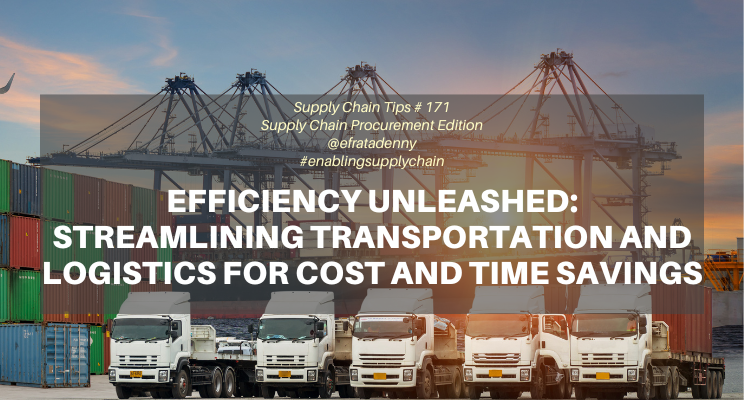
Within the intricate web of supply chain procurement, the optimization of transportation and logistics emerges as a pivotal strategy for achieving both cost reduction and enhanced lead times. This article explores the critical importance of streamlining these processes and provides insights into why it is indispensable for procurement success.
Efficient Route Planning: Embarking on the journey of cost and time savings begins with optimizing transportation routes. By minimizing the distance traveled, reducing fuel consumption, and fine-tuning delivery schedules, organizations can achieve efficiency gains and cost reductions.
Consolidated Shipments: Maximizing load capacity becomes a cost-saving endeavor through the consolidation of shipments. Combining multiple orders ensures that transportation costs are optimized, and the carbon footprint is minimized—a win-win for both financial and environmental sustainability.
Carrier Selection: Choosing the right carriers is paramount. Evaluating carriers based on criteria such as competitive rates, service reliability, and timely deliveries ensures that transportation partners align with the organization’s goals of efficiency and customer satisfaction.
Warehouse Optimization: The optimization journey extends to the warehouse. By strategically configuring warehouse layouts and refining inventory management, organizations can minimize handling time, enhance order fulfillment, and seamlessly integrate these improvements into streamlined logistics.
Real-Time Visibility: Visibility into the movement of shipments in real-time is a powerful tool. Technology solutions that provide tracking and visibility empower organizations to proactively address issues, enhance customer satisfaction, and maintain operational control.
Automation and Digitization: The digital transformation of documentation processes and embracing automation minimizes manual errors and maximizes operational efficiency. This shift toward digitization is a cornerstone in the quest for streamlined and error-free logistics operations.
Last-Mile Optimization: The final mile of delivery holds significant potential for optimization. Exploring alternative delivery methods, forging local partnerships, and adopting innovative solutions contribute to the optimization of last-mile processes, further reducing costs and improving delivery speed.
Continuous Improvement: The journey toward optimization is never truly complete. Regular evaluation and refinement of transportation and logistics processes, guided by data and stakeholder feedback, ensure that organizations remain agile, responsive, and committed to continuous improvement.
By unwaveringly focusing on the optimization of transportation and logistics, organizations can unlock substantial cost savings, improve delivery speed, and elevate the overall efficiency of their supply chain. This commitment to efficiency is not a destination but a continuous journey, ensuring sustained success in the dynamic landscape of supply chain procurement.










 Efrata Denny