

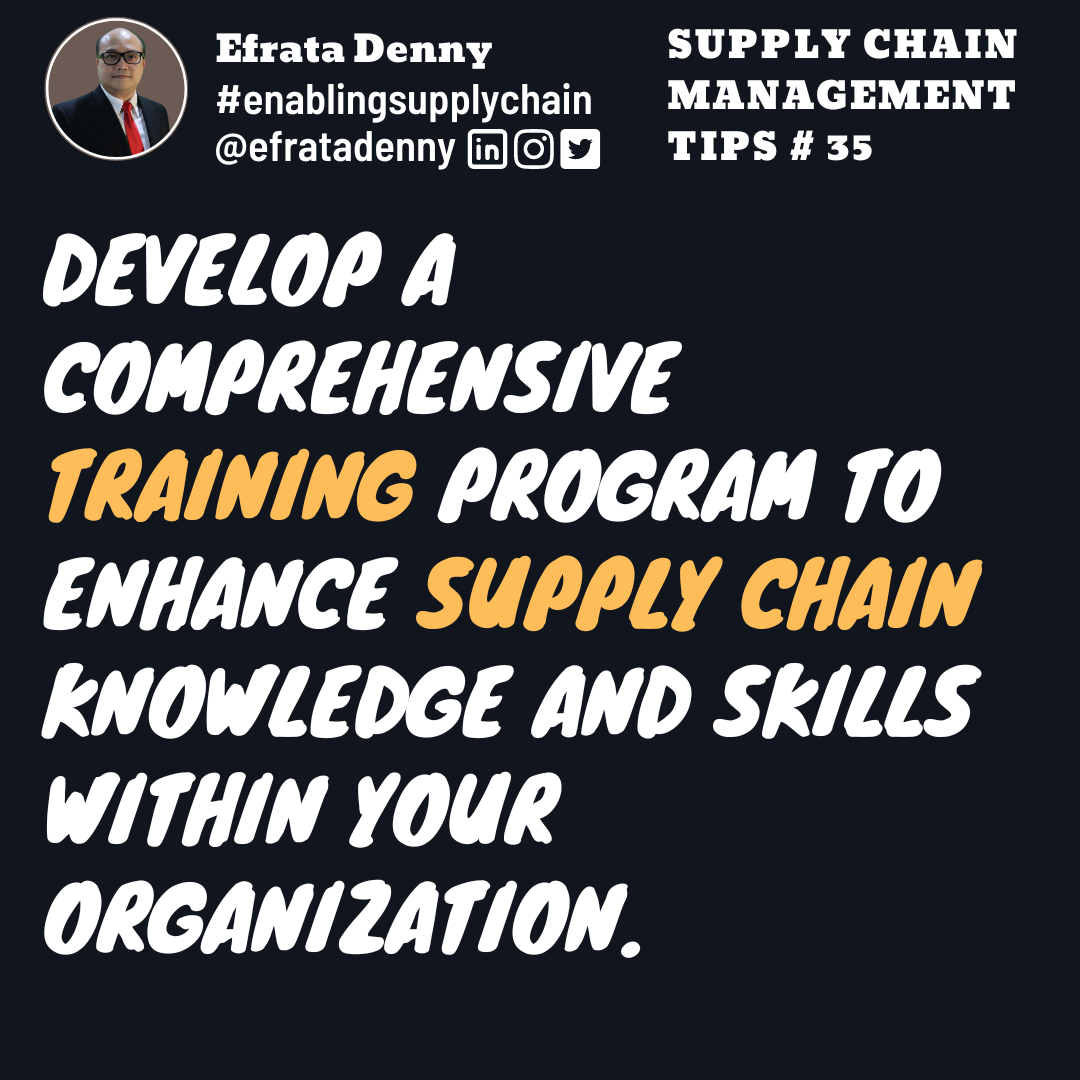
“Develop a comprehensive training program to enhance supply chain knowledge and skills within your organization.” – Efrata Denny
In the fast-paced world of supply chain management, staying ahead of the curve is not just an advantage—it’s a necessity. With markets evolving, customer expectations rising, and technological advancements reshaping the landscape, organizations need a dynamic workforce that can navigate these challenges with confidence. This is where a comprehensive supply chain training program comes into play, acting as a beacon of knowledge and empowerment for your teams.
The Power of Knowledge: Fueling Success
Knowledge has always been a driving force behind success. The more informed and skilled your workforce is, the more they can contribute to the growth and success of your organization. A well-structured supply chain training program acts as a catalyst for this empowerment. By providing your team members with in-depth insights into supply chain principles, best practices, and emerging trends, you equip them with the tools they need to excel.
Unlocking Operational Efficiency
Operational efficiency is at the core of a high-performing supply chain. Through training, employees can gain a holistic understanding of how different processes interconnect, identifying potential bottlenecks and inefficiencies. With this newfound knowledge, they can propose and implement process improvements that streamline workflows, reduce waste, and enhance overall productivity. The result? A supply chain that functions like a well-oiled machine, capable of delivering consistent results.
Fostering a Culture of Innovation
Innovation thrives in an environment where ideas are nurtured and encouraged. A comprehensive training program not only imparts technical skills but also fosters a mindset of innovation. By exposing your teams to case studies, real-world challenges, and creative problem-solving exercises, you cultivate their ability to think outside the box. This culture of innovation can lead to breakthroughs in processes, products, and strategies that set your organization apart from the competition.
Data-Driven Decision-Making
In today’s data-driven landscape, decisions based on insights trump gut feelings. Supply chain training equips your employees with the ability to analyze data, interpret trends, and make informed decisions. Whether it’s optimizing inventory levels, identifying demand patterns, or mitigating risks, a workforce that understands the nuances of data empowers your organization to make strategic choices that drive success.
Building Resilience in a Dynamic Market
Change is a constant in the business world. A well-trained workforce is better prepared to adapt to changing market conditions, technological disruptions, and unforeseen challenges. They possess the agility to pivot strategies, embrace new technologies, and seize emerging opportunities. This adaptability is a hallmark of a resilient supply chain—one that can weather storms and emerge stronger on the other side.
Creating a Culture of Continuous Learning
The supply chain landscape evolves rapidly, and learning should never stop. A training program kickstarts a culture of continuous learning, where employees are encouraged to update their skills, stay informed about industry advancements, and seek opportunities for personal and professional growth. This culture not only benefits individuals but also contributes to the overall knowledge capital of your organization.
The Ripple Effect: Impact on Success
When you invest in a comprehensive supply chain training program, the impact is far-reaching. Employees who feel valued and equipped with the tools they need to excel are more engaged, motivated, and loyal. This positive energy ripples throughout your organization, creating a work environment where collaboration, innovation, and excellence become second nature.
Implementing Your Training Program
Crafting an effective supply chain training program requires careful planning and customization to suit your organization’s unique needs. It involves defining learning objectives, selecting training methods (such as workshops, online courses, or mentorship programs), and measuring the program’s effectiveness through assessments and feedback.
A Future-Ready Supply Chain
As the supply chain landscape continues to evolve, organizations that invest in their workforce’s knowledge and skills are best positioned for success. A comprehensive supply chain training program is more than an investment—it’s an assurance of a brighter, more resilient future. By equipping your teams with the insights and abilities needed to navigate challenges and seize opportunities, you empower them to drive your organization towards supply chain excellence. So, embark on the journey of empowerment, innovation, and success by embracing the power of supply chain training!









 Efrata Denny