
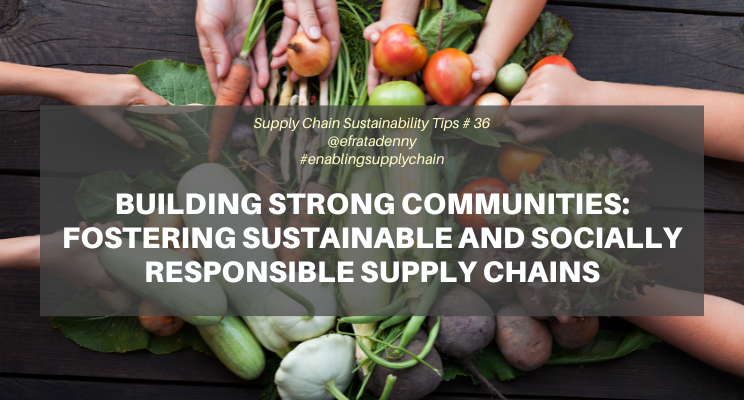
Engaging with local communities is a crucial aspect of building sustainable and socially responsible supply chains. By actively involving community members, understanding their needs, and minimizing negative social impacts, businesses can foster positive relationships and contribute to the well-being of communities. In this article, we will explore practical tips for community engagement and minimizing negative social impacts to build stronger, more sustainable supply chains.
- Community dialogue: Initiate open and transparent communication channels with local communities to establish a meaningful dialogue. By actively listening to their needs, concerns, and aspirations, businesses can gain valuable insights and build trust.
- Stakeholder engagement: Involve local community members, non-governmental organizations (NGOs), and relevant stakeholders in decision-making processes. By including their perspectives, businesses can ensure that their actions align with the community’s interests and create shared value.
- Social impact assessments: Conduct thorough assessments to understand the potential social impacts of your operations. Identify any potential negative effects and develop strategies to mitigate them, ensuring that your activities contribute positively to the community.
- Local employment and empowerment: Promote local employment opportunities and invest in skills development and capacity-building initiatives. By empowering community members through job creation and training, businesses can contribute to local economic growth and foster self-sufficiency.
- Respect cultural heritage: Respect and preserve the cultural heritage, traditions, and sacred sites of the local community. Ensure that your operations do not adversely impact cultural assets, and actively seek ways to support and celebrate local customs.
- Support local initiatives: Collaborate with community-based organizations and support local projects that address social needs. By investing in education, healthcare, environmental conservation, and other initiatives, businesses can make a meaningful and positive impact on the community’s well-being.
- Responsible sourcing: Align your sourcing practices with ethical standards. Support fair trade, respect indigenous rights, and promote social justice within your supply chain. By prioritizing responsible sourcing, you can contribute to the social and economic development of communities at the source of your materials.
Engaging with local communities and minimizing negative social impacts is essential for building sustainable and socially responsible supply chains. By establishing open communication channels, involving stakeholders, conducting social impact assessments, promoting local employment and empowerment, respecting cultural heritage, supporting local initiatives, and practicing responsible sourcing, businesses can foster positive relationships and contribute to community well-being. Let’s work together to build stronger communities, create shared value, and shape a brighter future for all. Embrace community engagement and make a difference!









 Efrata Denny