

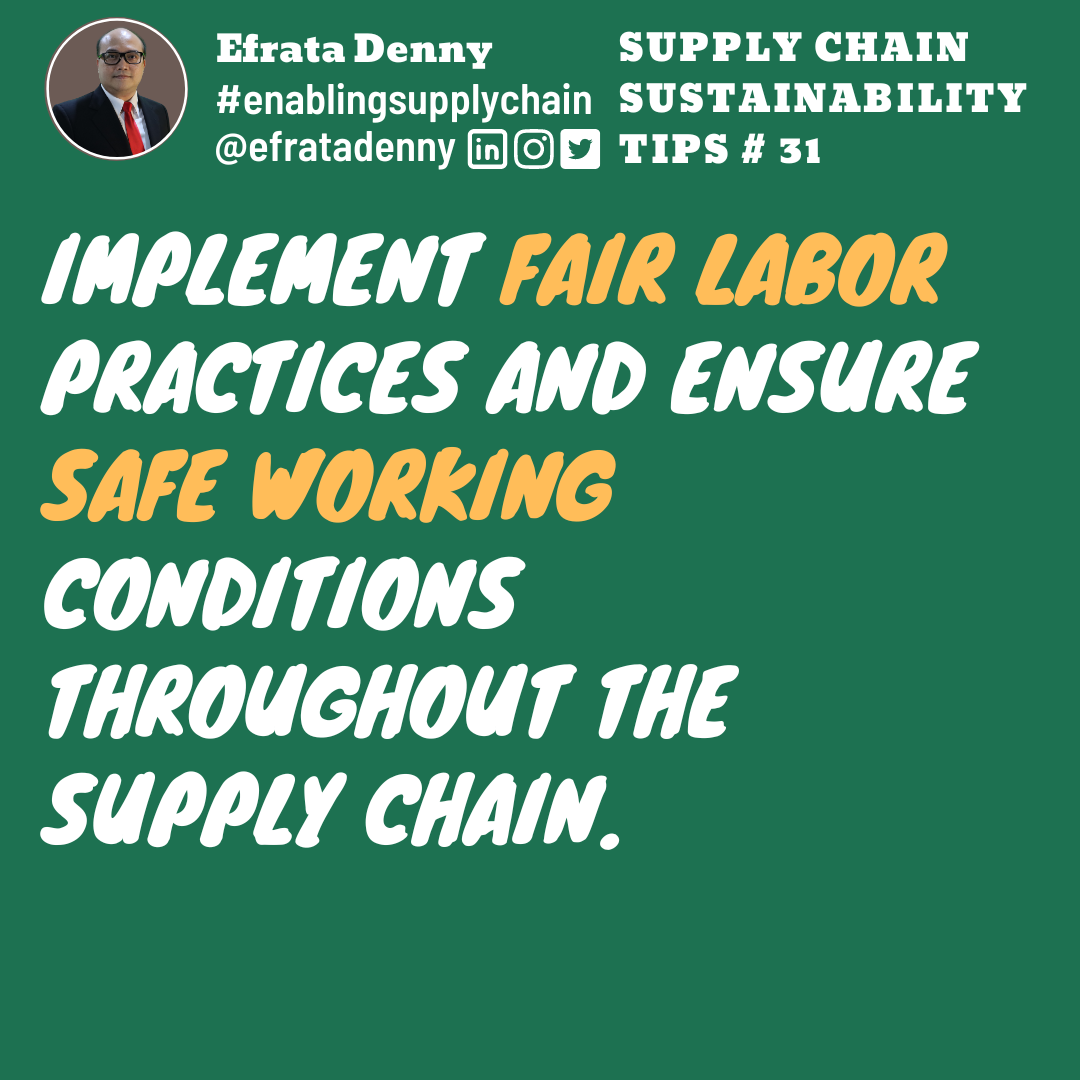
Creating a responsible and ethical supply chain goes beyond environmental sustainability. It also entails implementing fair labor practices and ensuring safe working conditions for all workers involved. By prioritizing the empowerment and well-being of workers, businesses can contribute to a more equitable and sustainable world. In this article, we will explore essential tips for building a responsible supply chain that respects labor rights and ensures safe working conditions.
- Respect workers’ rights: Upholding internationally recognized labor rights is fundamental to a responsible supply chain. This includes providing fair wages, reasonable working hours, and freedom of association as outlined by organizations such as the International Labour Organization (ILO). Treat workers as valuable partners in your supply chain and ensure their dignity and rights are respected.
- Collaborate with suppliers: Engage with your suppliers to ensure they adhere to ethical labor practices. Foster transparency and establish regular dialogue to address any concerns or violations promptly. By developing strong relationships with suppliers, you can work together to improve labor conditions and create positive change throughout the supply chain.
- Conduct regular audits: Regularly audit supplier facilities to assess compliance with labor standards. These audits should focus on fair treatment, safe working conditions, and proper worker protections. By conducting thorough assessments, you can identify areas that require improvement and work collaboratively with suppliers to implement necessary changes.
- Provide training and education: Invest in training programs that enhance worker skills and empower them with knowledge. By offering opportunities for professional development, you can support workers in advancing their careers. Training initiatives should also include educating workers about their rights, workplace safety practices, and channels for reporting grievances.
- Encourage worker well-being: Create a supportive work environment that promotes the physical and mental well-being of workers. Provide access to healthcare facilities, counseling services, and resources for maintaining a healthy work-life balance. Prioritizing worker well-being fosters loyalty, productivity, and long-term success.
- Support worker representation: Encourage the formation of worker committees or unions to allow for collective bargaining and empower employees to have a voice in decision-making processes. Supporting worker representation ensures that their perspectives are taken into account and helps create a more inclusive and equitable workplace.
- Continuous improvement: Regularly evaluate and improve labor practices by seeking feedback from workers. Conduct satisfaction surveys, implement suggestions for positive change, and address any concerns promptly. Engage workers in the process of continuous improvement to create a culture of collaboration and shared responsibility.
Building a responsible supply chain requires a commitment to fair labor practices and safe working conditions. By respecting workers’ rights, collaborating with suppliers, conducting regular audits, providing training, supporting well-being, and encouraging worker representation, businesses can empower workers and contribute to a more equitable and sustainable world. Let us stand together in creating responsible supply chains that prioritize the well-being and rights of workers. Together, we can build a brighter future for all.









 Efrata Denny