

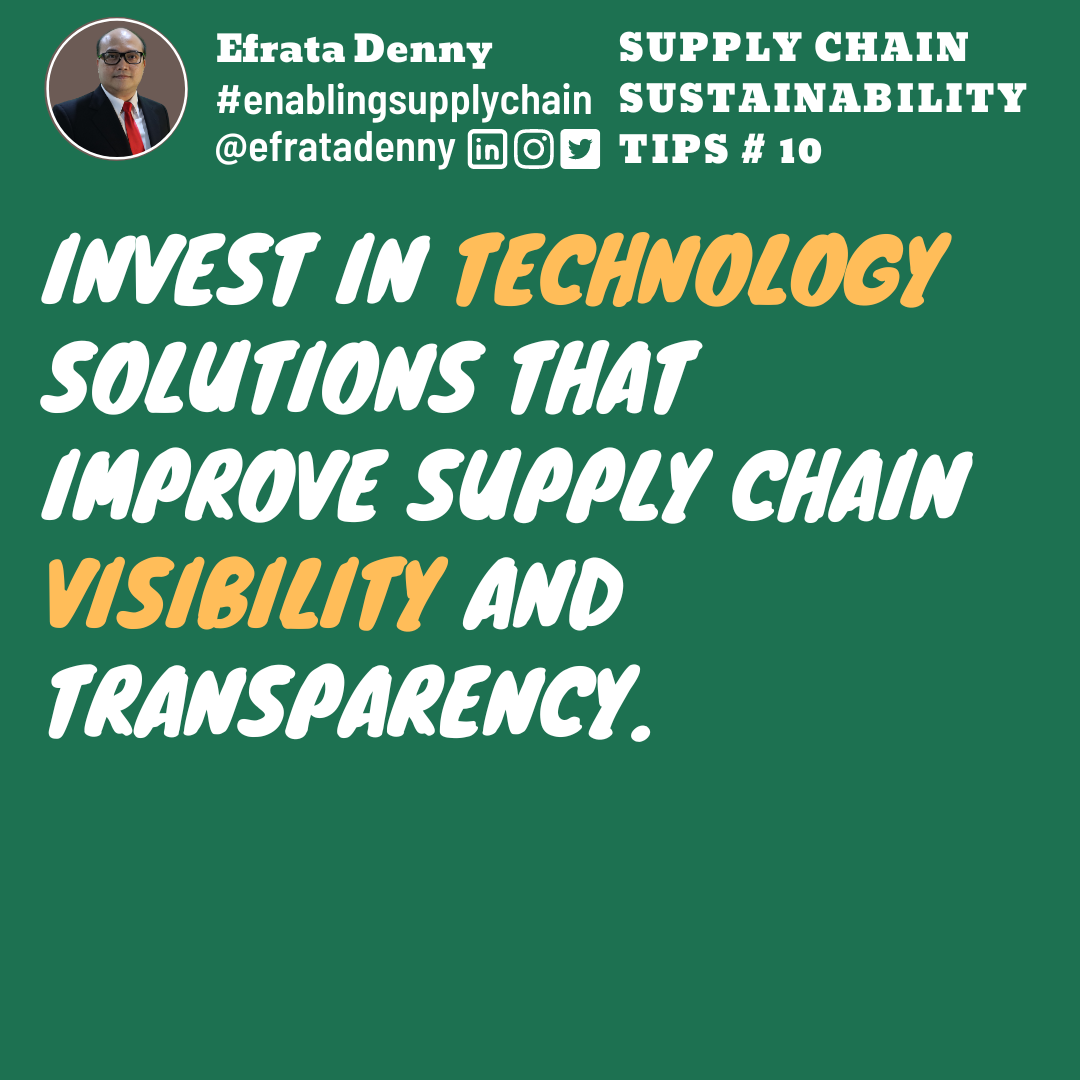
In today’s fast-paced and interconnected world, investing in technology solutions that enhance visibility and transparency is crucial for building a sustainable supply chain. By adopting advanced software, leveraging IoT devices, implementing blockchain technology, and utilizing data analytics, businesses can make informed decisions, optimize operations, and drive sustainability. In this article, we will explore practical tips on how to invest in technology for a greener future and achieve a more transparent and efficient supply chain.
- Adopt supply chain management systems: Implementing robust supply chain management systems provides real-time visibility into the entire supply chain. These software solutions enable better decision-making, streamline processes, and enhance collaboration among stakeholders. By having a comprehensive overview of the supply chain, businesses can identify areas for improvement and implement sustainable practices.
- Embrace IoT and sensors: The Internet of Things (IoT) devices and sensors play a crucial role in tracking and monitoring various aspects of the supply chain. By utilizing IoT devices and sensors, businesses can collect real-time data on inventory levels, transportation conditions, and storage parameters. This data allows for proactive decision-making, reduces waste, and ensures optimal efficiency throughout the supply chain.
- Implement blockchain technology: Blockchain technology offers a secure, transparent, and traceable system for supply chain transactions. By leveraging blockchain, businesses can ensure ethical sourcing, reduce the risk of fraud, and promote transparency. This technology enables stakeholders to verify the origin and authenticity of products, fostering trust and supporting sustainability initiatives.
- Enable data sharing: Collaboration is key to building a sustainable supply chain. By sharing data securely with partners and suppliers, businesses can promote transparency and foster a culture of sustainability. Digital platforms and data sharing tools facilitate efficient communication, encourage knowledge exchange, and drive collaborative efforts towards sustainable practices.
- Use predictive analytics: Data analytics and machine learning can provide valuable insights for supply chain optimization. By harnessing predictive analytics, businesses can anticipate demand, optimize routes, and reduce inefficiencies such as overstocking or understocking. These data-driven decisions lead to improved resource utilization, minimized waste, and enhanced sustainability performance.
- Monitor sustainability metrics: Technology allows for the monitoring of key sustainability metrics such as carbon emissions, water usage, or waste generation. By tracking these metrics, businesses can identify areas for improvement and implement targeted sustainability initiatives. Continuous monitoring of sustainability metrics enables progress tracking and supports the achievement of sustainability goals.
- Engage with stakeholders: Digital platforms and communication tools provide opportunities for engaging with customers, suppliers, and stakeholders. Businesses can share sustainability initiatives, gather feedback, and foster collaboration through these channels. Engaging stakeholders in the sustainability journey creates a sense of shared responsibility and promotes a greener future.
By investing in technology solutions that enhance visibility and transparency, businesses can achieve a more sustainable supply chain. Leveraging supply chain management systems, IoT devices, blockchain technology, data analytics, and digital platforms, companies can drive efficiency, make data-driven decisions, and foster collaboration. Let’s embrace innovation and technology for a greener future!









 Efrata Denny